Around Gwaneumsa Temple (Jeju)

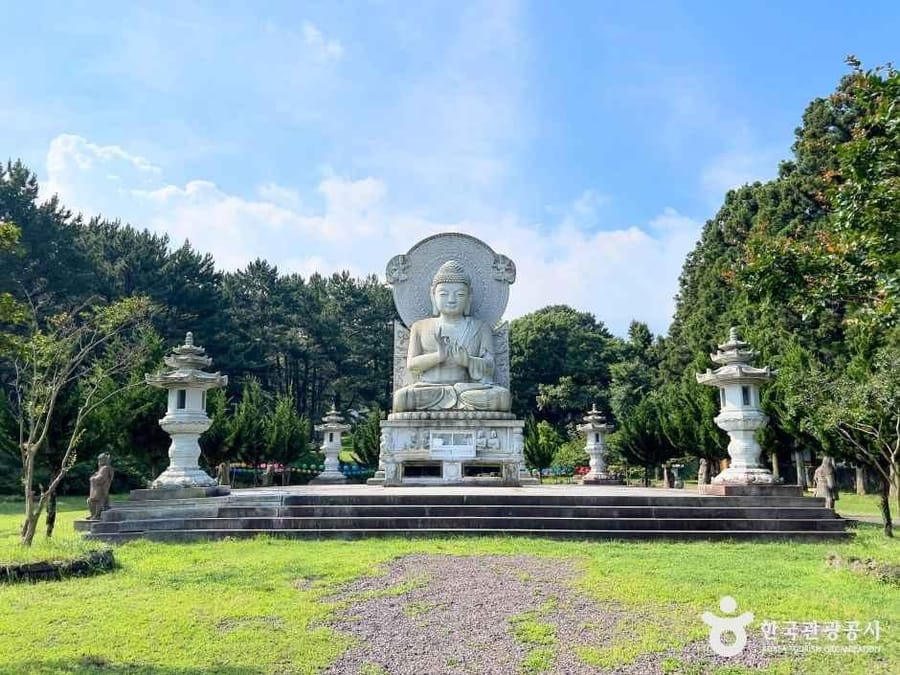
Gwaneumsa Temple (Jeju)
Gwaneumsa, located at the 650m base of Hallasan Mountain, is the head temple of the 23rd district of the Jogye Order of Korean Buddhism and the spiritual heart of Jeju, overseeing over 30 temples. Its history is deeply intertwined with Jeju's Buddhist traditions, mentioned in Goryeo-era records and existing through the Joseon Dynasty, known locally by various names. In 1702, all Jeju temples, including Gwaneumsa, were demolished under Joseon's Confucian policy. After 200 years, Master Anbong Ryeogwan began its reconstruction in 1908, completing key structures despite local opposition. This revival saw the establishment of Daeaksa, a downtown missionary temple, fostering a resurgence of Jeju Buddhism. However, misfortune struck again with a fire in 1939 destroying the main hall, and in 1948, during the Jeju 4·3 Incident, its strategic location led to the complete destruction of all its buildings amidst intense confrontations. Since the lifting of the Hallasan entry ban in 1969, Gwaneumsa has been meticulously rebuilt, starting with the Daeungjeon (Main Hall) and adding other significant structures like the Seonbang (Zen Hall), Yeongsanjeon, and Iljumun (One Pillar Gate), achieving its current form. Today, Gwaneumsa offers diverse programs, including Templestay experiences, teacher training, walking meditation, and mandala experiences. It also gained recent fame as the filming location for the popular drama <Extraordinary Attorney Woo>, where it was depicted as 'Hwangjisa.' Its stunning beauty, from the lotus lantern-adorned skies to its serene halls and Haewolguk, makes it a captivating destination.