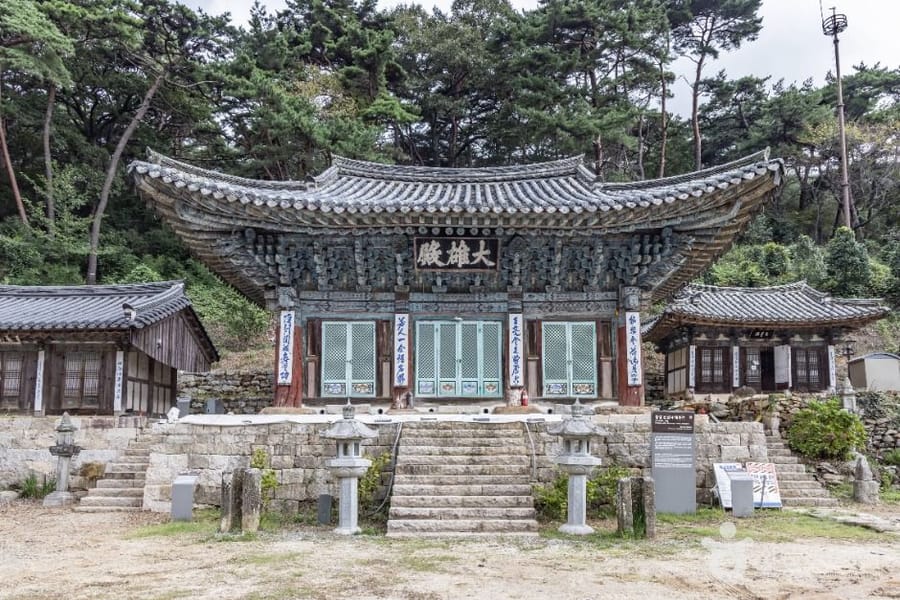
Anjeong Temple

Anjeong Temple

363, Anjeong 1-gil, Gwangdo-myeon, Tongyeong-si, Gyeongsangnam-do (Anjeong-ri)

Founded ·

법화종

Tongyeong Anjeongsa Temple is said to have been first built by Great Monk Wonhyo on Byeokbalsan Mountain in the 1st year of King Muyeol of Silla (654 AD). What was burned down and lost during the Imjin War was rebuilt numerous times, starting from the 4th year of King Injo of Joseon (1626), and what had become a ruin due to the Korean War was reconstructed by Monk Seolho, continuing to the present day. During the Unified Silla period, it is said to have been a large temple, boasting a 14-building complex and being a leading temple nationwide where over 1,000 monks cultivated themselves. After passing through Iljumun Gate, which marks the entrance to the temple, Haetalggyo (Liberation Bridge) appears, and after crossing the bridge and ascending the stairs, Anjeongsa Temple emerges. Existing buildings include Daeungjeon, Nahanjeon, Myeongbujeon, Chilseonggak, Manse-ru, Beomjongnu, and monks' quarters. Anjeongsa Temple's Daeungjeon was destroyed by fire during the Imjin War and was rebuilt in the 27th year of King Yeongjo (1751), fully displaying the architectural style of the late Joseon period. Manse-ru serves as a hall for Buddhist ceremonies and lectures, and its prominent characteristics as a pavilion built in temples in the Gyeongsangnam-do region during the Joseon dynasty led to its designation as cultural heritage material. The inscription "Wanli (萬曆) 8th year" is carved on the temple bell.