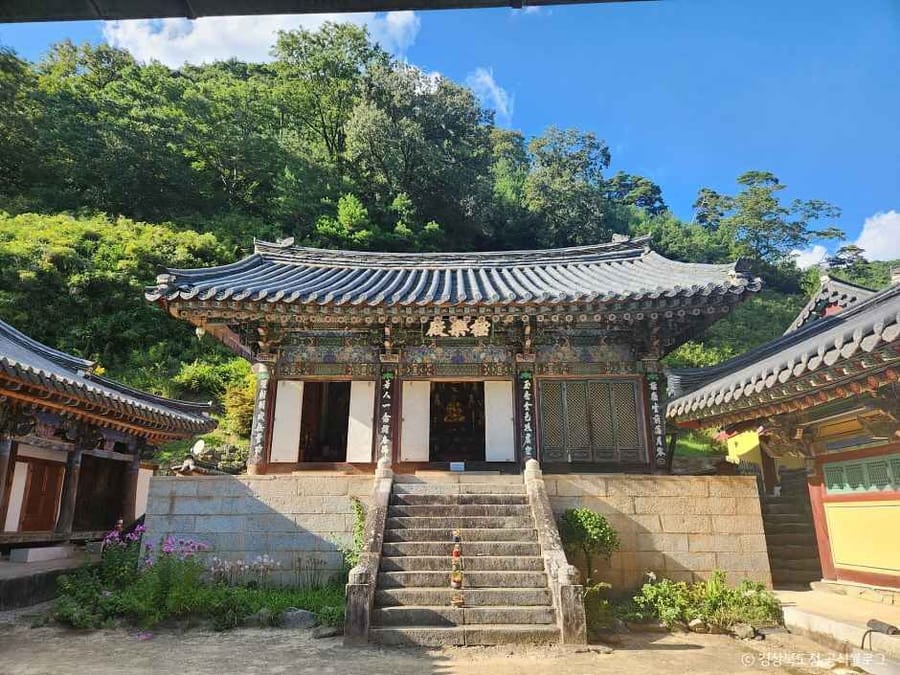
Gounsa
孤雲寺- Era
- Founded 681 · 통일신라
- Sect
- 조계종
- Feature
- 33 Avalokiteśvara Sacred Sites, District Head Temple, Temple Cuisine Specialty, Thousand-Year-Old Temple
415 Gounsa-gil, Danchon-myeon, Uiseong-gun, Gyeongsangbuk-do
Founded 681 · 통일신라조계종
0 visitors
Verify your visit to unlock challenges.
Temple information
Gounsa is a temple founded by Uisang Daesa in 681. At the time of its founding, it was called Gounsa (高雲寺), but about 200 years later, after Goun Choe Chi-won practiced asceticism here and built Gaeunnu and Uwharu, it was renamed Gounsa (孤雲寺) after his pen name. Since then, it underwent several renovations during the Joseon Dynasty. During the Imjin War, Gounsa served as a forward base for Buddhist monk soldiers under Samyeong Daesa, where food was stored and wounded soldiers were cared for. During the Japanese colonial period, it was one of the three main headquarters nationwide for the March 1st Movement, blossoming as a center for patriotic Buddhism. Within the temple grounds are buildings such as Daeungjeon, Geuknakjeon, Gwaneumjeon, Geumgangmun, Uwharu, and Gogumdang. Important cultural properties held here include the Stone Seated Buddha of Gounsa in Uiseong, the Three-story Stone Pagoda of Gounsa, Gounsa Gaeunnu, and Yeonseujeon of Gounsa in Uiseong. Gounsa's experience programs include Temple Stay and temple food experiences. For Temple Stay, there is the "Dugeun Dugeun Temple Stay," a free program aimed at healing the hard work and stress of test-takers, the "Youth Healing Camp" for university students, and the "Forest Path of Mind" where visitors can relax through programs such as Buddhist rituals, tea ceremonies with monks, and walking meditation. Temple food experiences are held at the Gounsa Temple Food Experience Center, where visitors can make temple food under the guidance of a monk who has faithfully inherited the traditional temple food recipes. The temple food experience program consists of a Temple Class, Beginner Class, Short-term Class, Fermented Food Experience Class, and One-day Experience Class.