526 Dorisa-ro, Haepyeong-myeon, Gumi City, North Gyeongsang Province
Founded · 삼국시대
조계종
태조산, 아도화상 전법도량
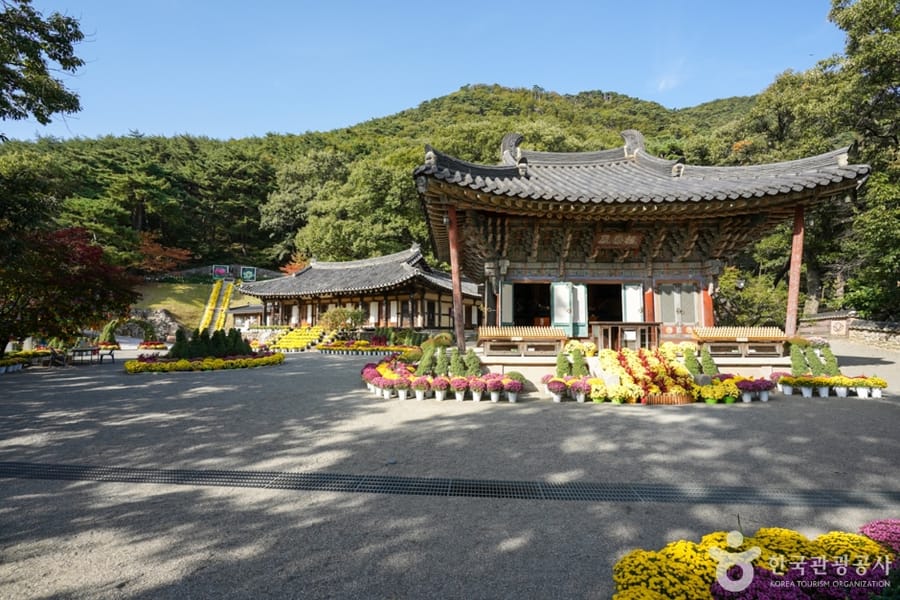
Dorisa Temple is known as the birthplace of Haedong Buddhism and Silla's first Buddhist temple, initially established for the propagation of Buddhism in Silla, where Buddhism did not exist, by Adohwasang, a monk from Goguryeo, during the reign of Silla's 19th King Nulji (417 AD). While Adohwasang was searching for a place to practice, he saw peach and plum blossoms in full bloom here, even in winter. Realizing it was an auspicious site, he built a temple here with the donation of More Jangja and named it Dorisa, taking the name from "peach" (do) and "plum" (ri). At this holy site, where the Dharma wheel of Silla Buddhism first turned, the true sarira of Sakyamuni Buddha, brought by Adohwasang when he came to propagate Buddhism in Silla, was discovered in 1976 during the repair work of the Sakyamuni Sarira Stupa, enshrined within a gilt-bronze hexagonal reliquary. The gilt-bronze reliquary from Dorisa's Sakyamuni Sarira Stupa is presumed to have been made in the mid-8th century, designated as National Treasure No. 208, and is currently on entrusted display at Jikjisa Temple Museum of Buddhist Art. While Silla officially recognized Buddhism in 514 AD (the 14th year of King Beopheung's reign), Dorisa Temple, founded more than 70 years earlier, possesses tangible cultural heritage commensurate with its history, such as the Hwaeom Stone Pagoda (a Treasure), a statue of Adohwasang (newly erected in 2002), the Sakyamuni Sarira Stupa, the Stele of Adohwasang's Historical Site, and Buddhist paintings (tanghwa) from the late Joseon Dynasty, and operates a temple stay program for the propagation of designated Buddhist doctrines and Buddhist culture.