741, Pagye-ro, Dong District, Daegu Metropolitan City
Founded 804 · 통일신라
조계종
팔공산, 영산회상도(보물)
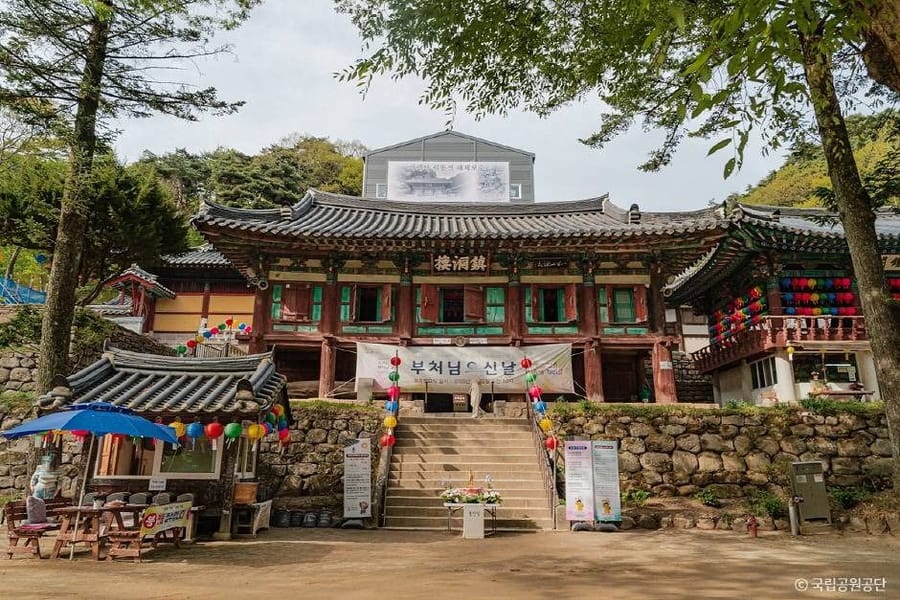
Pagyesa Temple, located within Palgongsan Natural Park, is a branch temple of Donghwasa Temple, which is the head temple of the 9th diocese of the Jogye Order of Korean Buddhism. The surrounding area, with its dense forests and clear streams, forms a picturesque landscape. According to historical records, it was founded by Royal Preceptor Simji in the 5th year of King Aejang's reign (804), rebuilt by Gye-gwan in the 38th year of King Seonjo's reign (1605), and renovated a third time by Hyeoneung in the 21st year of King Sukjong's reign (1695). Pagyesa Temple has a deep connection with King Yeongjo of Joseon. King Sukjong had a dream of a monk entering the palace. He sought the monk from his dream outside Namdaemun Gate and found it was Seonsa Yeongwon. The King asked him to pray for the birth of a prince, and shortly after, Royal Noble Consort Suk-bin Choe became pregnant and gave birth to a prince, who would later become King Yeongjo. Delighted, King Sukjong bestowed the honorific name Hyeoneung upon the monk. At that time, while Pagyesa Temple suffered greatly from the tyranny of Confucian scholars (yusaeng), Hyeoneung reportedly showed wisdom by requesting King Sukjong to enshrine the royal ancestral tablets at the temple, thereby curbing the scholars' excesses. To this day, Pagyesa Temple preserves a stele for dismounting (hamabi), a stele and stupa of Grand Master Hyeoneung, and a ceremonial robe (dopo) of King Yeongjo. Among the existing temple buildings, four dignified structures—Jindongnu, Seolseondang, and Jeokmukdang—are arranged in a square layout around the Wontongjeon Hall. The Wontongjeon Hall is the central building, enshrining a seated dry-lacquer Avalokiteshvara Bodhisattva. Additionally, the temple houses a Yeongsanhwessangdo (Assembly of Vulture Peak Mountain painting, a Treasure) and ancient documents related to royal ancestral shrines (wondang). In front of the main Dharma hall stands an octagonal stone lantern, 2 meters high. There are also two folding screens and two beads bestowed by King Sukjong, and to the west of the temple stand the stupas and steles of three grand masters, including Hyeoneung. Its affiliated hermitages include Hyeon-ni-am, Geumdang-am, Seongjeon-am, and Chilseong-am. Among these, Seongjeon-am houses a portrait and murals of Hyeoneung, believed to be from the Joseon Dynasty. Pagyesa, whose name signifies "a temple that gathers scattered water paths," is a beautiful temple renowned for its clear streams even within Palgongsan Natural Park.