Sudoksa Temple
修德寺- Era
- Founded 599 · 삼국시대
- Sect
- 조계종
- Feature
- 33 Avalokiteśvara Sacred Sites, District Head Temple, Thousand-Year-Old Temple
79 Sudeoksaangil, Deoksan-myeon, Yesan County, South Chungcheong Province
Founded 599 · 삼국시대조계종
0 visitors
Verify your visit to unlock challenges.
Temple information
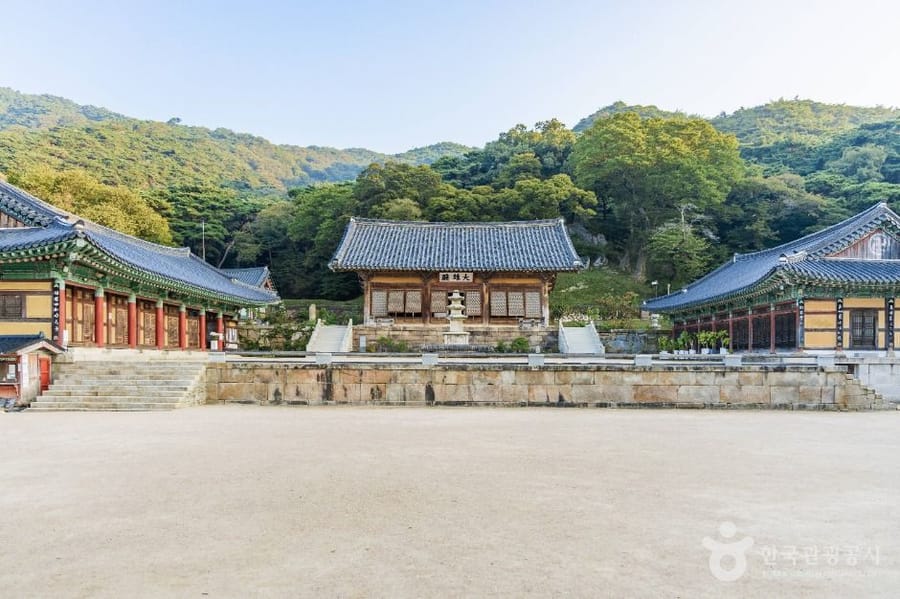
Sudoksa Temple is located on the southern foothills of Deoksungsan Mountain (495m) in the Charyeong mountain range, which rises near Deoksan Hot Springs. It is a large temple, serving as the head temple of the 7th district of the Jogye Order of Korean Buddhism, overseeing Jogye Order temples in the Naepo region of Chungcheongnam-do. Founded around the 6th century during the Baekje Dynasty, it is an ancient temple boasting a history of nearly 1,500 years. It boasts beautiful scenery, to the extent that it has been selected as the No. 1 scenic spot in Yesan County. According to its founding legend, a young man fell in love with a maiden, and her condition for marriage was that he build a temple. After he built the temple and took the maiden's hand, she disappeared, and it turned out that she was an incarnation of Avalokiteshvara (Gwanseum-bosal). Founded with this legend, Sudoksa Temple has undergone several renovations and repairs during the Goryeo and Joseon Dynasties and the Japanese colonial period, reaching its present state. Various cultural properties from the Baekje Dynasty to the Joseon Dynasty remain here. Not only are the Daeungjeon (Main Hall), designated as a National Treasure, and the Hanging Painting of Rocana Buddha and the Lotus Sutra, designated as Treasures, preserved, but also many cultural properties designated by Chungcheongnam-do, such as the Three-story Stone Pagoda and the Seven-story Stone Pagoda, are preserved. Additionally, various Buddhist cultural properties are housed in the Geunyeok Seongbogwan. Also located within the temple grounds are the thatched-roof house where artist Lee Ungno (1904-1989) engaged in his artistic activities, the Historic Site of Master Lee Ungno (Sudok Yeogwan), and the Seon Art Museum, which exhibits works by Lee Ungno and modern/contemporary artists, as well as Buddhist artworks. Templestay programs offer a variety of options tailored to demand and preferences.