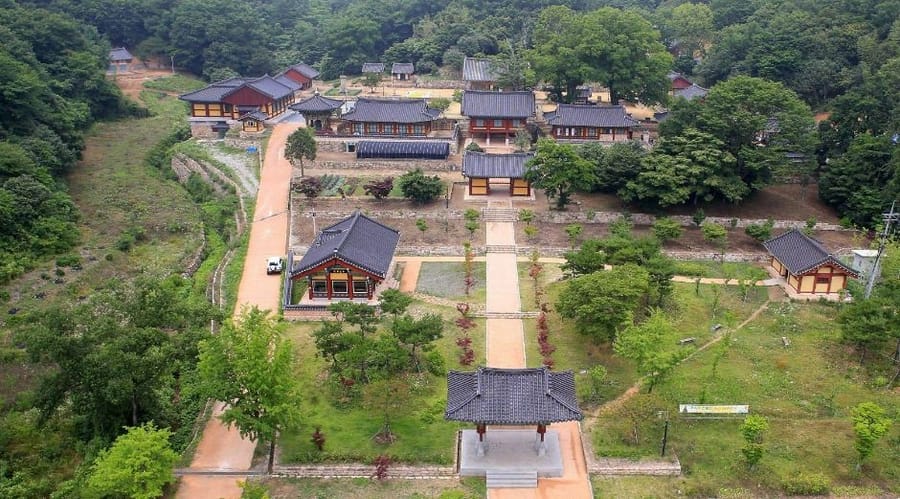
308, Muwisa-ro, Seongjeon-myeon, Gangjin County, Jeollanam-do
Founded 617 · 삼국시대
조계종
월출산, 극락보전 아미타불벽화(국보)
According to the historical records of Muwisa Temple, its first major reconstruction was when National Preceptor Doseon [道詵] founded it as Garoksa Temple [葛屋寺] in 875 (the 1st year of King Heongang). And not long after this, from 905 (the 9th year of King Hyogong) onwards, Seon Master Hyeongmi [逈微] (864-917), also known as National Preceptor Seongak [先覺國師], of the Gaji-sanmun [迦智山門] lineage of Seon Buddhism, reportedly stayed at Muwigapsa Temple [無爲岬寺] at the request of Goryeo Taejo Wang Geon, undertook renovations of the temple, and widely spread Buddhist teachings, thereby gaining popular support. Therefore, it can be concluded that Muwisa Temple was founded as Muwigapsa Temple before the early 10th century when Seon Master Hyeongmi resided there. However, according to the historical records of Muwisa Temple, it is stated that in 946 (the 1st year of King Jeongjong) during the Goryeo period, Hyeongmi undertook the third major reconstruction and changed the temple's name to Mo-oksa Temple [茅屋寺]. However, 946 was already 30 years after Hyeongmi's passing, and it was the year when the 'Stele for National Preceptor Seongak Pyeonggwang, Formerly of Muwigapsa in Goryeo,' authored by Choe Eon-wi, was erected, making this account difficult to believe. This is likely a misunderstanding by later generations of the fact that Hyeongmi extensively reconstructed Muwigapsa with Wang Geon's patronage and widely spread Buddhist teachings. It is clear that Muwisa Temple was founded before the early 10th century, was reconstructed by Hyeongmi, and was a Seon Buddhist temple belonging to the Gajisanmun school.