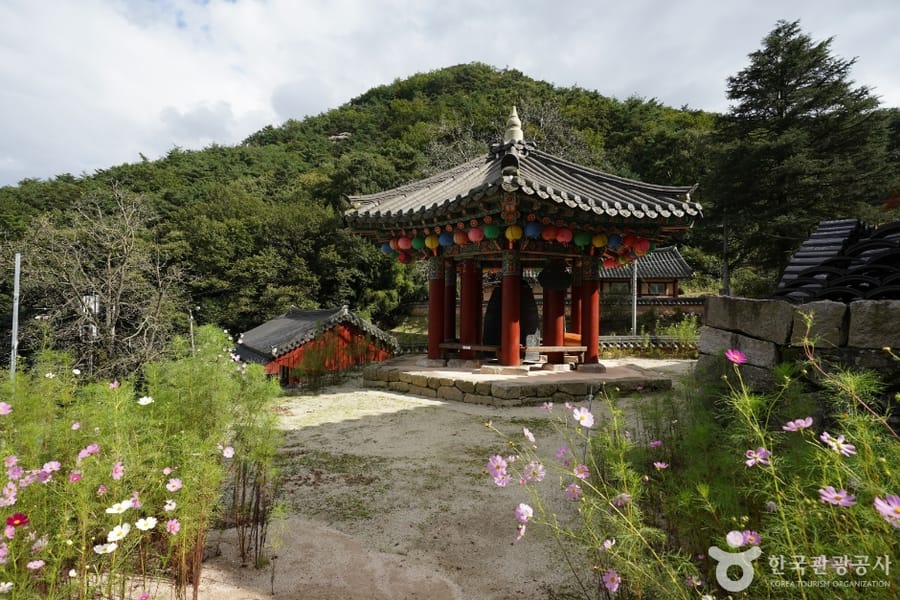
Bulgul Temple

Bulgul Temple

205 Bulgulsa-gil, Wachon-myeon, Gyeongsan City, North Gyeongsang Province

Founded ·

조계종

Bulguksa Temple is located on the southern foothills of Palgongsan Mountain and is a branch temple of Eunhaesa Temple, the head temple of the 10th district of the Jogye Order of Korean Buddhism. It is named after the fact that a Buddha statue is enshrined inside a natural rock cave. It is said to have been founded in the 10th year of King Sinmun of Silla (690 AD). During its heyday, it was a large temple with over 50 tiled buildings, 12 attached hermitages, and 8 watermills. However, in the 12th year of King Yeongjo of Joseon (1739), it was swept away and lost in a flood, and later rebuilt by an old monk from Songgwangsa Temple in Jeollado. Within the temple grounds are the three-story stone pagoda of Bulguksa, designated as a treasure, the Jeokmyeolbogung shrine where the true relics of Buddha are enshrined, and a stupa with a standing Medicine Buddha statue. If one passes the temple kitchen and ascends about 10 minutes past 108 steps, there is a cave said to be where Great Master Wonhyo meditated, known as Wonhyo Cave or Hongjuam. The mineral spring inside the rock cave was created during the Silla Dynasty, and the inscription "Adong Jeil Yaksu" (First Mineral Water for Adong/Children/East) is clearly carved into it. According to oral tradition, this mineral water is also called "Janggunsu" (General's Water), and it is known as a place where General Kim Yu-sin prayed for the unification of the Three Kingdoms while drinking this water. What is unique is that when there is a rainy season around Bulguksa Temple, sweat appears on the face of the Buddha statue, and especially before heavy rain, the entire body of the Buddha statue is said to become thoroughly soaked.