Unjusa Temple

Unjusa Temple

91-44 Cheontae-ro, Doam-myeon, Hwasun County, South Jeolla Province

Founded · 삼국시대

조계종

천불천탑(와불 포함), 독특한 석불군

Book Templestay

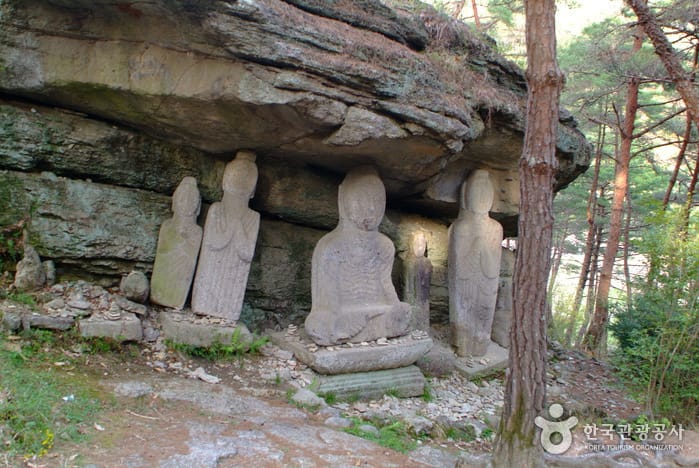
Unjusa Temple, the second of Hwasun's Eight Scenic Views, has several theories regarding its founding, including one that suggests National Preceptor Doseon founded it, another that Monk Unju founded it, and yet another that Grandmother Mago built it. However, the most widely known story is that National Preceptor Doseon founded it as a bibo temple based on geomancy at the end of the Unified Silla period. A bibo temple, meaning "to help and protect," refers to a temple built by artificially creating pagodas or Buddha statues to supplement the natural topography according to geomancy. It is a temple that embodies the wisdom of Monk Doseon, who sought national protection and the well-being of all sentient beings by borrowing the power of Buddha. The temple was damaged during the Imjin War and remained in ruins, but in the 18th century, Ja-u repaired the Buddha statues and pagodas and rebuilt the Yaksa-jeon (Hall of Bhaisajyaguru Buddha). Based on artifacts excavated during archaeological surveys, including a gilt-bronze standing Buddha statue, fragments of pure celadon, inlaid celadon, buncheong ware, and roof tiles, it is presumed to have been built no later than the early 11th century, during the early Goryeo Dynasty. On a hill west of Unjusa Valley, there is a pair of recumbent Buddha statues, often referred to as the "Husband and Wife Reclining Buddhas," lying on the ground. The area around the temple has been designated as a cultural heritage protection zone, and in 2017, it was finally listed on the UNESCO World Heritage Tentative List under the name "Hwasun Unjusa Stone Pagoda Group."