Ssangbong Temple

Ssangbong Temple

741 Jeung-ri, Iyang-myeon, Hwasun County, South Jeolla Province

Founded ·

조계종

Book Templestay

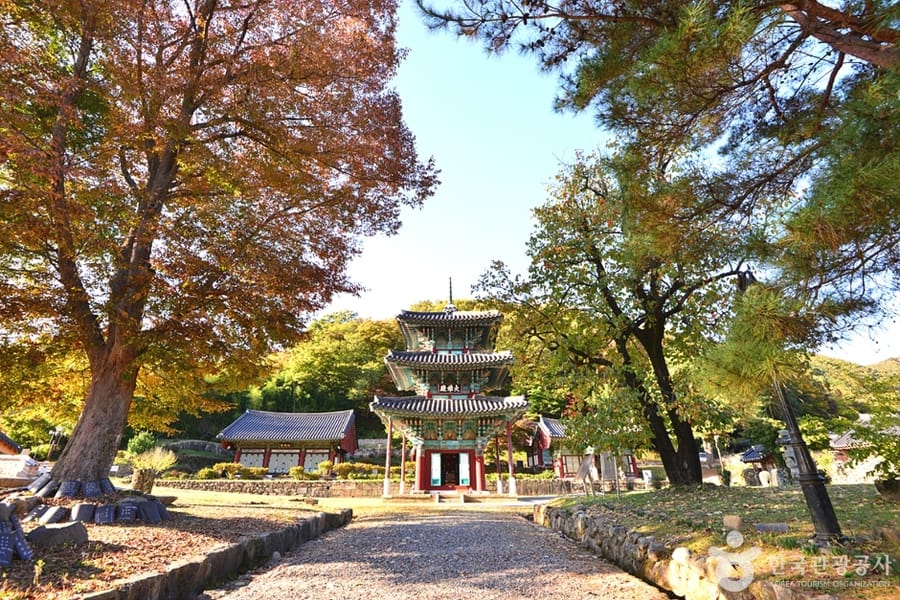
Ssangbongsa Temple was founded before 839 during the Unified Silla period, where Master Hyecheol Seonsa spent a summer. Around 855, Master Cheolgam Seonsa returned from China and, seeing the harmonious convergence of mountains and water here, founded the temple. Its name, Ssangbongsa (meaning 'Twin Peak Temple'), comes from the topography featuring two peaks, a twin-peak formation, in front of and behind the temple. The temple, which had fallen into disrepair after its founding, was rebuilt in 1081 by National Preceptor Hyeso to its original appearance. After being destroyed during the Imjin War, it has undergone several reconstructions and continues to this day. Important cultural heritage items included the Stupa of Master Cheolgam Seonsa, the Stele for the Stupa of Master Cheolgam Seonsa, and the Ssangbongsa Daeungjeon (Main Buddha Hall). The Stupa of Master Cheolgam Seonsa is considered the most beautiful work among Korean stone stupas. The Stele for the Stupa of Master Cheolgam Seonsa is a work from the late Silla period, with only its *gwibu* (turtle-shaped base for the stele) and *isu* (the capstone adorned with dragon carvings) remaining. Furthermore, the square three-story Daeungjeon, with a total height of 12 meters, was the only building in Korea that preserved the form of a three-story wooden pagoda, excluding its finial, but it was destroyed by an accidental fire caused by a candle in 1984. Experiential programs include a Templestay, which is divided into 'Rest-Type' and 'Long-Term Rest-Type' options. Participants can experience temple meals, Buddhist chanting, meditation, and tea talks with monks. It is a program designed to help participants maintain a healthy mind and body by breathing fresh air in a pure and clean temple environment and walking around the temple grounds.