40, Cheongdo 6-gil, Geumsan-myeon, Gimje City, Jeonbuk Special Self-Governing Province
Founded 676 · 통일신라
조계종
모악산, 대적광전(보물)
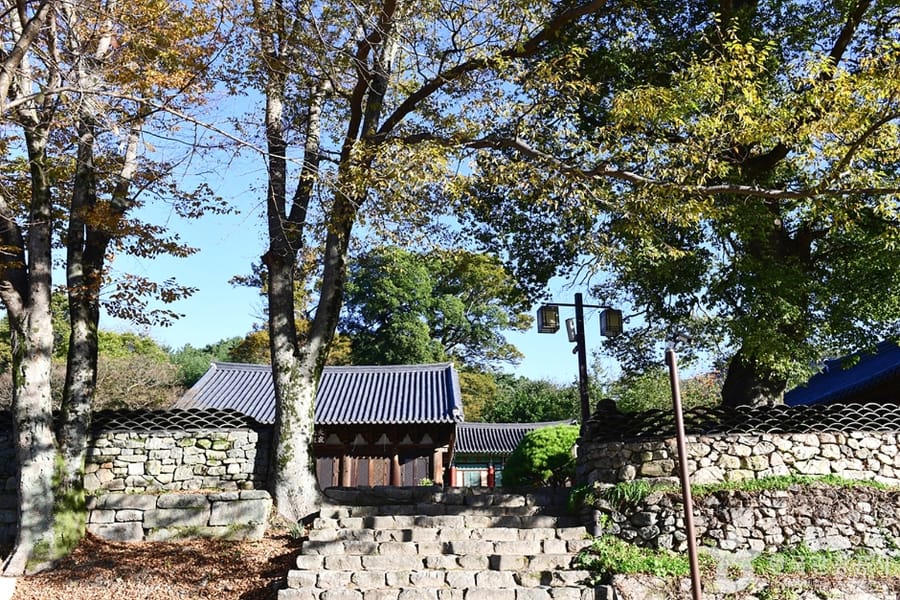
It is an affiliated temple of Geumsansa, the head temple of the 17th district of the Jogye Order of Korean Buddhism, located in Cheongdo-ri, Geumsan-myeon. Gwishinsa is known to have been founded by Master Uisang in 676 (the 16th year of King Munmu's reign), but there is also a claim that it was first established as a royal Naewonsa during the reign of King Beop of Baekje. It is said that its original name at the time of its founding was Gukshinsa. After that, in the late Unified Silla period, Doyun rebuilt it, and its name was changed to Gwishinsa. During the Goryeo Dynasty, National Preceptor Wonmyeong (1090-1141) rebuilt it, and around this time, it was called Gusunsa. Afterwards, following several partial renovations and major reconstructions, its name was changed back to Gwishinsa in 1934, after the Daejeokgwangjeon and other structures were renovated. Gwishinsa was originally a large temple, so extensive that it was said to have overseen Geumsansa. In the late Goryeo Dynasty, approximately 300 Japanese pirates are said to have been stationed there, but now it has declined and remains a small and modest temple. The main cultural heritage items of Gwishinsa include the Treasure Daejeokgwangjeon, a three-story stone pagoda, stupas, and a stone guardian. The three-story stone pagoda is presumed to have been built along with the founding of Gwishinsa and is an outstanding work that represents the beauty of the Silla period. The stupa is located in the middle of a rice paddy at the entrance of Cheongdowon Village, indicating that during its heyday, the temple grounds extended to where this stupa now stands. The Gwishinsa stone guardian is unique: a phallic-shaped stone pillar is boldly inserted into the middle of the back of the sitting stone guardian. This is a unique stone structure where Buddhist thought and phallic worship beliefs are combined. There are theories that it was erected to suppress the site's energy or that the Baekje royal family erected it to pray for blessings.