Around Seongjusa-ji Temple Site

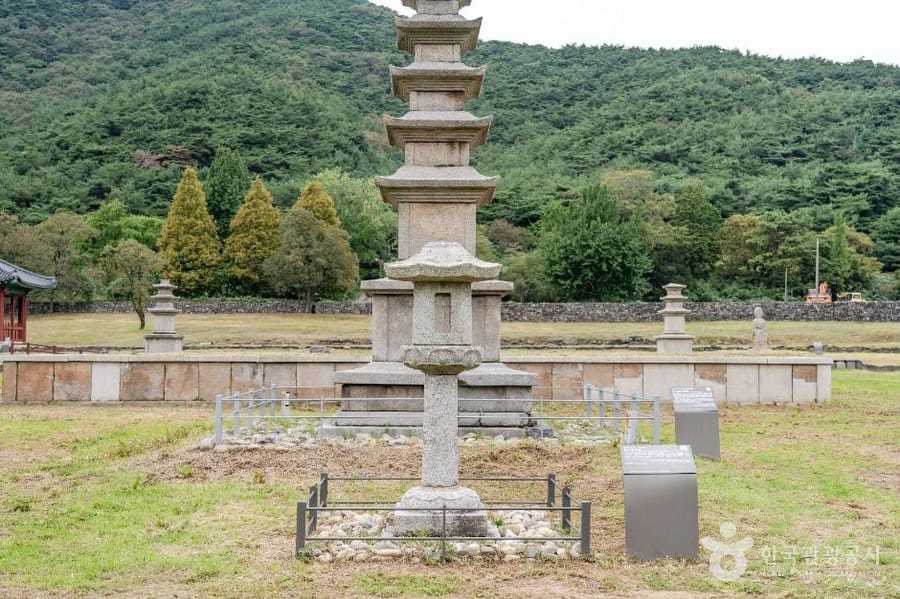
Seongjusa-ji Temple Site
Boryeong Seongjusa-ji is a historic temple site situated in a valley south of Seongjusan Mountain (676.7m) in eastern Boryeong-si. Seongjusa Temple was a highly prosperous temple, renowned as one of the Nine Mountain Seon Gates of the late Unified Silla period. It was originally founded around the 6th century by King Beop of Baekje under the name Ohapsa, and is believed to have been renamed Seongjusa during the late Unified Silla era. In its heyday, Seongjusa was an immense complex, boasting over a thousand bays (kan) and home to more than 2,000 monks. Due to its significant influence, archaeological excavations at the site continue to unearth artifacts spanning from the Baekje period to the early Joseon Dynasty. Designated as a Historic Site, Seongjusa-ji currently preserves several important cultural assets. These include the National Treasure Stele for Buddhist Monk Nanghye (Nanghye Hwasang Baekwolbogwangtapbi), the Treasure Five-story Stone Pagoda, the Treasure Central Three-story Stone Pagoda, the Treasure Western Three-story Stone Pagoda, the Stone Lantern (Chungcheongnam-do Tangible Cultural Heritage), and the Stone Staircase and Standing Stone Buddha (Chungcheongnam-do Cultural Heritage Material). Excavations have revealed the foundations of major buildings such as the main hall (Geumdang-ji), the Three Thousand Buddha Hall (Samcheonbuljeon-ji), cloisters (Hoerang-ji), and the middle gate (Jungmun-ji). In the northwest part of the temple site stands an elegantly constructed pavilion housing a stupa stele. The inscription on this stele was composed by Go-un Choi Chi-won, a celebrated scholar of Silla, and inscribed by his nephew Choi In-yeon. Visitors can now explore related exhibits at the Seongjusa-ji Millennial History Hall, located adjacent to the site. Boryeong Seongjusa-ji is accessible via Simwon Valley Road from National Road 40. It is conveniently located near Daecheon IC and Muchangpo IC of the Seohaean Expressway, and Seobuyeo IC of the Seocheon-Gongju Expressway. Beyond Seongjusan Mountain, nearby attractions include Boryeong Mugunghwa Arboretum, Boryeong Coal Museum, Boryeong Youth Training Center, Simyeondong Valley (also known as Seongju Valley), and the administrative center of Seongju-myeon.