Seongju-ri, Seongju-myeon, Boryeong-si, Chungcheongnam-do
Founded 656 · 삼국시대
-
폐사지, 낭혜화상탑비(국보)
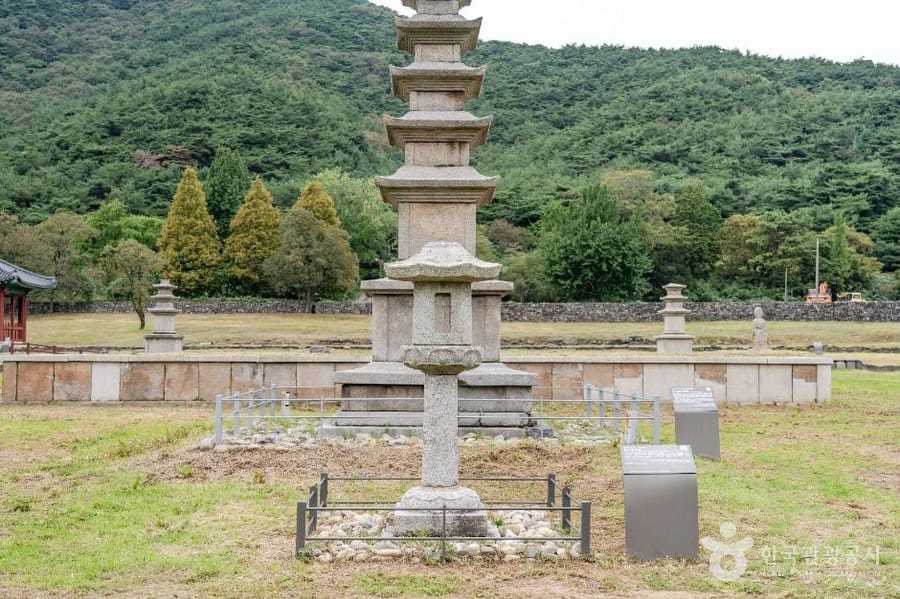
The Seongjusa Temple Site in Boryeong is a temple site located in the southern valley of Seongjusan Mountain (676.7m) in eastern Boryeong City. Seongjusa Temple was a highly prosperous temple, renowned as one of the nine Seonmun (Zen) schools of mountains during the late Unified Silla period. Seongjusa Temple was founded as Ohap-sa by King Beop of Baekje around the 6th century, and its renaming to Seongjusa is said to have occurred in the late Unified Silla period. During its heyday, Seongjusa Temple was a large complex, encompassing about 1,000 *kan* and housing approximately 2,000 monks. Due to its historical significance, artifacts spanning from the Baekje period to the early Joseon Dynasty are being excavated from the temple site. The Seongjusa Temple Site, designated as a Historic Site, currently houses the National Treasure Stele for Buddhist Monk Nanghye, Baekwolbogwang Pagoda, the Treasure Five-story Stone Pagoda, the Treasure Central Three-story Stone Pagoda, the Treasure West Three-story Stone Pagoda, the Chungcheongnam-do Tangible Cultural Heritage Stone Lantern, and the Chungcheongnam-do Cultural Heritage Material Stone Stairs and Stone Standing Buddha, among others. Excavation surveys have revealed the foundations of buildings such as the Geumdang (main hall), Samcheonbuljeon (hall of three thousand Buddhas), cloister, and Jungmun (middle gate) sites. To the northwest of the temple site stands an elegantly built pavilion, inside which is a stupa stele. The inscription on the stele was composed by Go-un Choe Chiwon, a great scholar-official of Silla, and the calligraphy was done by his nephew, Choe Inyeon. Currently, visitors can view exhibits at the Seongjusa Temple Site Millennium History Museum, built right next to the site. The Seongjusa Temple Site in Boryeong can be accessed via Simwongyegok-ro from National Road 40. Daecheon IC and Muchangpo IC on the Seohaean Expressway, and Seobuyeo IC on the Seocheon-Gongju Expressway are nearby. In the vicinity, besides Seongjusan Mountain, there are the Boryeong Mugunghwa Arboretum, Boryeong Coal Museum, Boryeong City Youth Training Center, Simyeondong Valley (Seongju Valley), and the Seongju-myeon administrative office.