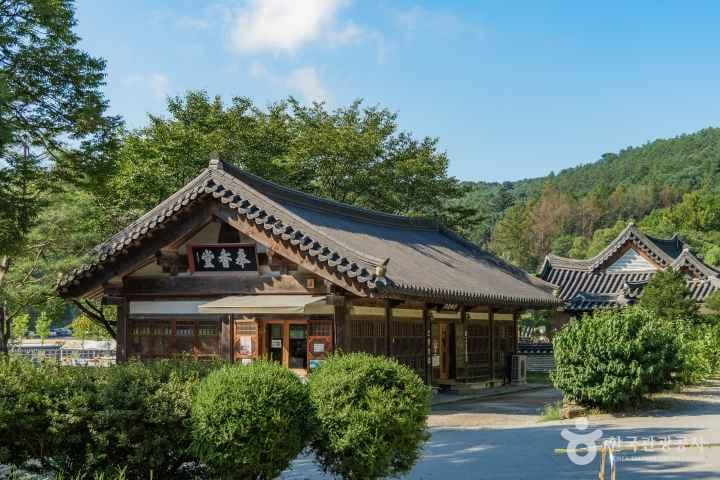
Bongseonsa Temple
奉先寺- Era
- Founded 969 · 고려
- Sect
- 조계종
- Feature
- District Head Temple, Temple Cuisine Specialty, Thousand-Year-Old Temple
32 Bongseonsa-gil, Jinjeop-eup, Namyangju City, Gyeonggi Province
Founded 969 · 고려조계종
0 visitors
Verify your visit to unlock challenges.
Temple information
Bongseonsa Temple, the head temple of the 25th district of the Jogye Order of Korean Buddhism, is a central temple of the Doctrinal School (Gyo-jong) and a grand monastery that directly inherits the traditional style of a leading doctrinal temple and the Dharma lineage of a meditation temple (Seon-jong). It was founded in 969 AD, the 20th year of King Gwangjong of Goryeo, by State Preceptor Beob-in, who named it Unaksa. Later, in 1469 AD, the first year of King Yejong of Joseon, Queen Jeonghui, King Sejo's consort, enshrined King Sejo's royal tomb on this mountain, naming it Gwangneung. Subsequently, she initially established this temple, designating it as a jabhoksa (a temple praying for the deceased monarch's blessings and good fortune) for the late king's royal tomb, and named it Bongseonsa. Bongseonsa Temple repeatedly suffered the misfortune of being damaged by war during the Japanese invasions of Korea (Imjin War), the Qing invasion of Joseon (Byeongja Horan), and the Korean War. Following Nanghye Daesa (1539), Gye-min Seonsa rebuilt it in 1637, and it was again renovated in 1749 and 1848, restoring its elegant and majestic appearance as a grand temple. However, today's Bongseonsa Temple reflects the reconstruction efforts that began around 1960. Every summer, Bongseonsa Temple hosts the Bongseonsa Lotus Festival, a Buddhist cultural festival centered around lotuses. A large lotus field spanning approximately 1,000 pyeong (about 3,300 square meters) is cultivated, allowing visitors to witness a truly beautiful sight when the lotuses are in full bloom. This festival, which began in 2003, is held annually to introduce the public to the tranquil atmosphere and culture that can only be experienced in a mountain temple, and to embody a Buddhist culture of communication and harmony.