Around Yongjusa Temple (Hwaseong)

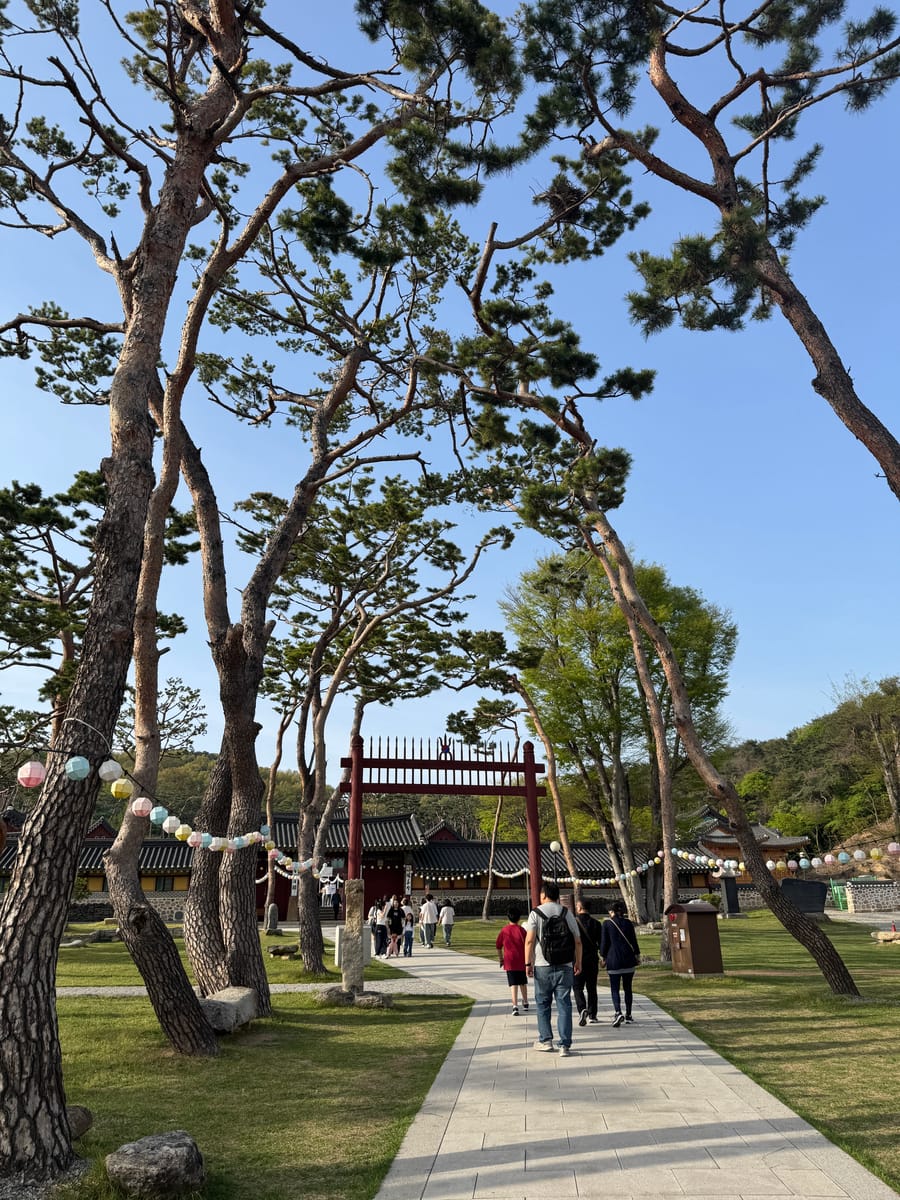
Yongjusa Temple (Hwaseong)
Yongjusa Temple was founded by King Jeongjo. Originally, Gillyangsa Temple was established here in the 16th year of King Munseong of Silla (854 AD), and a water and land ritual (surukjae) was performed in the early Goryeo period. However, it was destroyed due to frequent wars and subsequently abandoned. Later, when King Jeongjo moved the tomb of his father, Crown Prince Sado, to Hwaseong, he built a royal temple here. It is said that on the night of the temple's completion ceremony, King Jeongjo had a dream where a dragon ascended to the sky holding a magic pearl (yeouiju), leading him to name the temple Yongjusa (Dragon Pearl Temple). Yongjusa Temple's major cultural heritage items include the Yongjusa Bell (National Treasure), the Hoehyangnamu Tree (Natural Monument), a Gilt-bronze Incense Burner (Gyeonggi-do Tangible Cultural Heritage), a Bronze Incense Burner (Gyeonggi-do Tangible Cultural Heritage), Sangnyangmun (Gyeonggi-do Tangible Cultural Heritage), Illustrated Sutra Manuscripts (Gyeonggi-do Tangible Cultural Heritage), a Folding Screen (Gyeonggi-do Tangible Cultural Heritage), Daeungjeon Hu-Bul Taenghwa (Gyeonggi-do Tangible Cultural Heritage), and Buddhist Sutra Boards on the Profound Kindness of Parents (Gyeonggi-do Tangible Cultural Heritage). As Yongjusa Temple originated from King Jeongjo's filial piety, it was rebuilt with the wish for Crown Prince Sado's peaceful afterlife in paradise. It is a place where the spirit of filial piety breathes among the cultural heritage passed down by ancestors. Through the kind guidance and detailed explanations of the [Yongjusa Filial Piety Museum], established to uphold this spirit of filial piety, one can discover the wisdom necessary for life from the relics left by our ancestors.