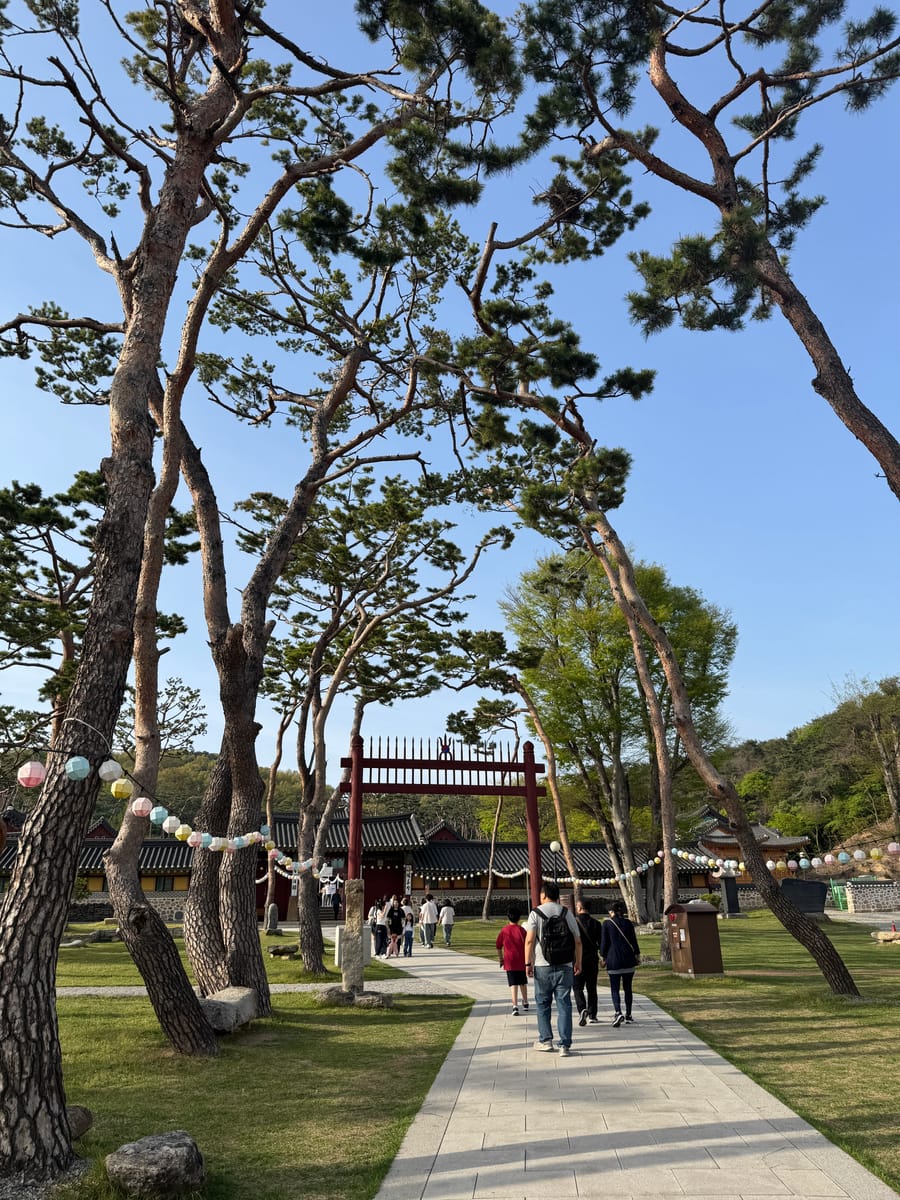
Yongjusa Temple (Hwaseong)
龍珠寺- Era
- Founded 854 · 통일신라
- Sect
- 조계종
- Feature
- 33 Avalokiteśvara Sacred Sites, District Head Temple, Thousand-Year-Old Temple
136, Yongju-ro, Hwaseong-si, Gyeonggi-do
Founded 854 · 통일신라조계종
0 visitors
Verify your visit to unlock challenges.
Temple information
Yongjusa Temple is a temple founded by King Jeongjo. Originally, Gilyangsa Temple was established here in the 16th year of King Munseong of Silla (854 AD), and a water-land ritual (Surukjae) was performed in the early Goryeo period. However, it was destroyed by frequent wars and subsequently abandoned. Later, when King Jeongjo moved the tomb of his father, Crown Prince Sado, to Hwaseong, he established a royal ancestral temple here. It is said that on the night of the dedication ceremony, King Jeongjo had a dream where a dragon ascended to heaven with a wish-granting pearl (yeouiju) in its mouth, and thus the temple was named Yongjusa (Dragon Pearl Temple). Yongjusa's major cultural heritage items include the Yongjusa Bronze Bell (National Treasure), the Hoeyang Tree (Natural Monument), a Gilt-bronze Incense Burner (Gyeonggi-do Tangible Cultural Heritage), a Bronze Incense Burner (Gyeonggi-do Tangible Cultural Heritage), a Ridge Beam Inscription (Gyeonggi-do Tangible Cultural Heritage), Handwritten Buddhist Scriptures (Gyeonggi-do Tangible Cultural Heritage), a Folding Screen (Gyeonggi-do Tangible Cultural Heritage), a Main Buddha Painting behind the Daeungjeon Hall (Gyeonggi-do Tangible Cultural Heritage), and the Scripture on the Profound Kindness of Parents (Gyeonggi-do Tangible Cultural Heritage). As Yongjusa originated from King Jeongjo's filial piety, it was rebuilt as a temple dedicated to praying for Crown Prince Sado's peaceful rebirth in the Pure Land, and it is a place where the spirit of filial piety, among the cultural heritage passed down by ancestors, truly thrives. Through the kind guidance and detailed explanations at the Yongjusa Museum of Filial Piety, established to uphold this spirit of filial piety, visitors can discover the wisdom necessary for life within the artifacts left by our ancestors.