Around Doseonsa Temple

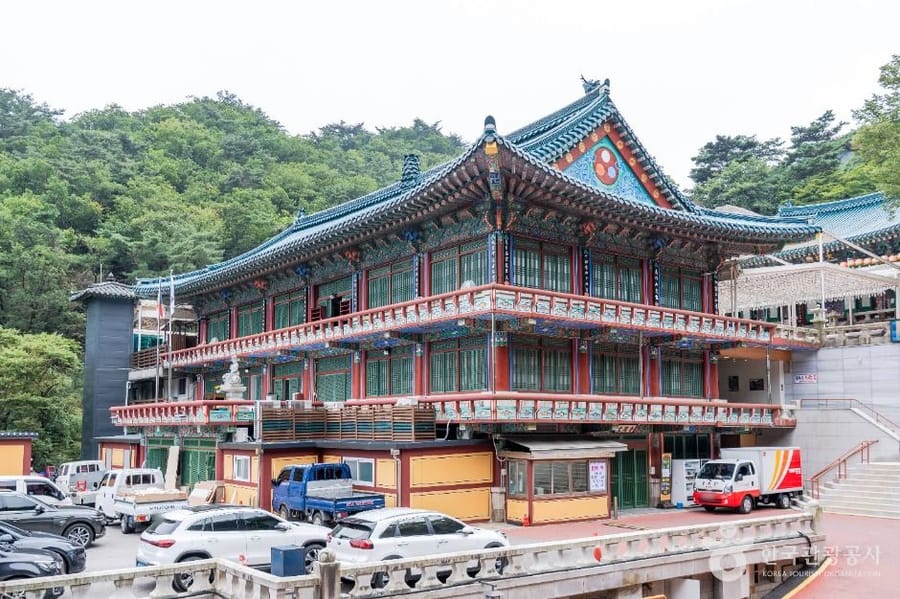
Doseonsa Temple
About 1 km up the valley from the west of Uii-dong, towards Baegundae Peak, the highest peak of Mt. Bukhansan, one encounters a mountain gate (山門) with the inscription ‘Three days of cultivating the mind is a treasure for a thousand years; a hundred years of coveting material things is but a speck of dust in a single morning’ (三日修心千載寶 百年貪物一朝塵) on its pillar. According to historical records, Doseonsa Temple is said to have been founded in 862 (the 2nd year of King Gyeongmun) by National Preceptor Doseon. It is said that National Preceptor Doseon predicted that the mountainous terrain here would be a place to revive Buddhism in the Mappō (degenerate) age, a thousand years later. After founding the temple, he is said to have split a large rock with his staff to carve a rock-engraved statue of Avalokiteshvara Bodhisattva. Although there are no records of its reconstruction or renovation until the late Joseon Dynasty, it is recorded that Buddhist warrior monks (Seungbyeong) stood guard duty (방번) at this temple during the construction of Bukhansanseong Fortress. In 1863 (the 14th year of King Cheoljong), it was renovated with donations from Kim Jwa-geun, and the Chilseonggak (Big Dipper Shrine) was newly built. In 1887 (the 24th year of King Gojong), Im Jun erected a five-story pagoda, enshrining the sarira (relics) of Shakyamuni Buddha within it. Existing temple buildings include the Daeungjeon (Main Hall) as the center, along with the Hoguk Chamhoe Won (Patriotic Repentance Hall), Myeongbujeon (Hall of the Underworld Judges), Samseonggak (Three Sages Shrine), Jeokmukdang (Monks' Quarters), Cheonwangmun (Gate of the Four Heavenly Kings), Beomjonggak (Bell Pavilion), Jongmuso (Temple Office), and Yosachae (Monks' Dormitory). Inside the Daeungjeon, the Amitabha Triad is enshrined, and portraits of Bodhidharma, Huineng, and Cheongdam are painted on the inner walls of the main hall, along with a Buddhist altar painting (Hubultaenghwa), P'alsangdo (Paintings of the Eight Scenes of the Buddha's Life), and Geukrak Gupumdo (Paintings of the Nine Grades of Rebirth in the Western Paradise). Currently, Doseonsa Temple houses numerous Buddhist cultural properties, including Seoul Metropolitan Government Tangible Cultural Heritage items such as the Rock-engraved Standing Buddha (No. 34), Wooden Amitabha Buddha and Mahasthamaprapta Bodhisattva Statues (No. 191), Stone Dokseongsang (No. 192), and a Bronze Bell and Associated Artifacts (No. 259). Additionally, there are other sacred cultural assets like the Jangsisiwangdo (Paintings of Ksitigarbha and the Ten Kings of Hell), Gwaebuldo (Large hanging scroll painting), Myobeop Yeonhwagyeong (Lotus Sutra), and Daebanggwang Bulhwaeomgyeongso (Avatamsaka Sutra commentary), created in the late 19th century.