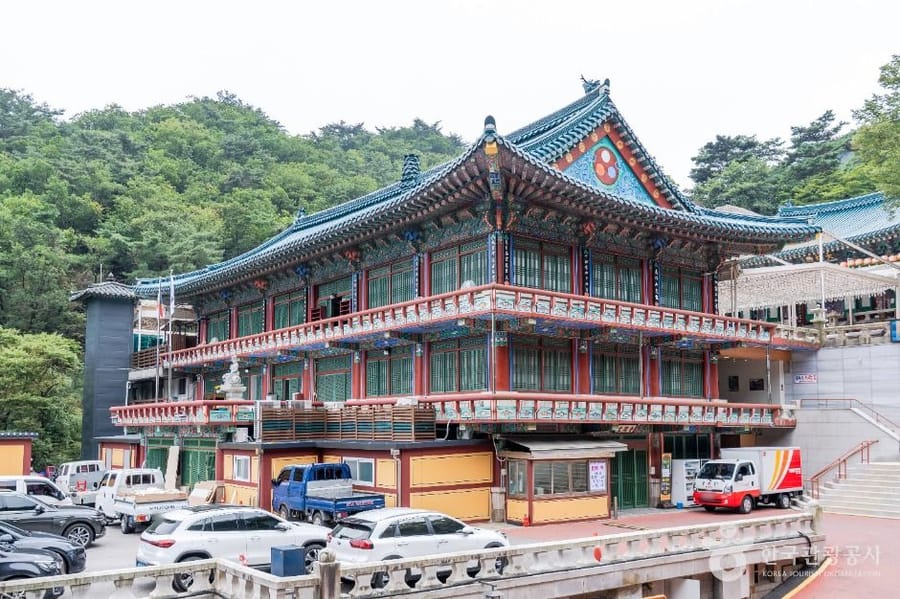
Doseonsa Temple
道詵寺- Era
- Founded 862 · 통일신라
- Sect
- 조계종
- Feature
- 33 Avalokiteśvara Sacred Sites, Thousand-Year-Old Temple
278 Doseonsa-gil, Ui-dong, Gangbuk District, Seoul Special City
Founded 862 · 통일신라조계종
0 visitors
Verify your visit to unlock challenges.
Temple information
About 1 km up the valley from the west of Uidong, towards Baegundae, the highest peak of Bukhansan Mountain, one encounters a mountain gate (Sanmun) whose Iljuseok (single pillar stone) is inscribed with 'Three days of cultivating the mind is a treasure for a thousand years, one hundred years of greedy desire for possessions turns to dust in a single morning.' According to historical records, Dosansa Temple is said to have been founded by State Preceptor Doseon in 862 (the 2nd year of King Gyeongmun's reign). It is said that State Preceptor Doseon foresaw that the topography of this place would be where Buddhist teachings would be revived in the Mappō period (the latter days of the Dharma) 1,000 years later. After founding the temple, he is said to have split a large rock with his monk's staff (Jujangja) to create a rock-cut Bodhisattva Avalokiteshvara statue. Although there are no records of reconstructions or major repairs until the late Joseon Dynasty, there are records that monk soldiers (Seungbyeong) stood guard (Bangbeon) at this temple while Bukhansanseong Fortress was being built. In 1863 (the 14th year of King Cheoljong's reign), it was repaired with donations from Kim Jwa-geun, and Chilseonggak Hall was newly constructed. In 1887 (the 24th year of King Gojong's reign), Im Jun erected a five-story pagoda, and enshrined the true sarira of Sakyamuni Buddha in the pagoda. Existing temple buildings include, centered around the Daeungjeon (Main Hall), Hoguk Chamhoewon, Myeongbujeon Hall, Samseonggak Shrine, Jeokmukdang Hall, Cheonwangmun Gate, Beomjonggak Bell Pavilion, Jongmuso (temple office), and Yosachae (monks' living quarters). Inside the Daeungjeon, the Amitābha Triad is enshrined, and on the inner walls of the Dharma Hall, portraits of Bodhidharma, Huineng, and Cheongdam are painted, along with a main altar painting (Hubul Taenghwa), paintings depicting the Eight Scenes from the Life of the Buddha (Palsangdo), and paintings of the Nine Grades of Rebirth in Amitābha's Pure Land (Geungnak Gupumdo), among others. Currently, Dosansa Temple houses numerous cultural heritage properties, including Seoul Metropolitan Government Tangible Cultural Heritage items such as the Rock-cut Standing Buddha (No. 34), Wooden Amitābha Buddha and Mahāsthāmaprāpta Bodhisattva (No. 191), Stone Dokseong-sang (No. 192), and a Bronze Bell and Associated Artifacts (No. 259), as well as Buddhist cultural assets like the late 19th-century paintings of Ksitigarbha and the Ten Kings of Hell (Jijang Siwangdo), large outdoor hanging paintings (Gwaebuldo), the Lotus Sutra (Myobeop Yeonhwagyeong), and commentaries on the Avatamsaka Sutra (Daebanggwang Bulhwaeomgyeongso).