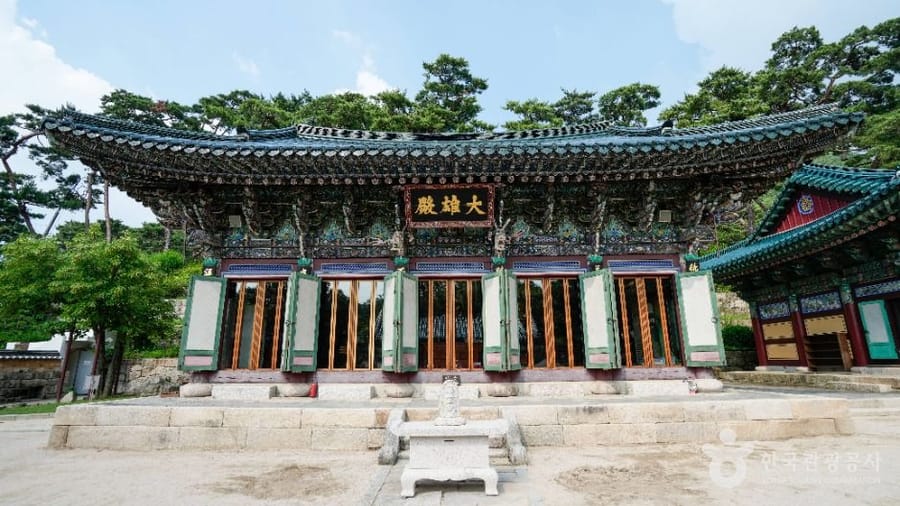
Jingwan Temple
- Era
- Founded 1011 · 고려
- Sect
- 조계종
- Feature
- Temple Cuisine Specialty, Thousand-Year-Old Temple
73 Jingwan-gil, Eunpyeong District, Seoul Metropolitan City
Founded 1011 · 고려조계종
0 visitors
Verify your visit to unlock challenges.
Temple information
Jingwansa Temple is a temple directly administered by the Jogye Order of Korean Buddhism, and along with Buramsa Temple to the east, Sammaksa Temple to the south, and Seunggasa Temple to the north, it is a renowned temple that has long been considered one of the four great famous temples in the vicinity of Seoul. It was founded in 1011 by King Hyeonjong (顯宗), the 8th monarch of Goryeo, who defended the nation against the Khitan invasion and preserved national strength, in honor of Jin Gwan Daesa (Great Master Jin Gwan). It is known as an ancient temple that was reduced to ruins by bombing during the Korean War (6·25) and later restored. In 2009, during the internal dismantling of Chilseonggak Hall, approximately 20 artifacts related to the independence movement, including copies of the Dongnip Sinmun (Independence Newspaper) wrapped in a Taegeukgi (Korean national flag) used like a traditional Korean cloth wrapper (bojagi), were discovered between the Buddhist altar and a pillar of Chilseonggak. The discovered Taegeukgi appears to have been produced and used by an institution or organization during the March 1st Movement in 1919, and it is believed to have been drawn over a Japanese flag (Iljanggi) of the time. It holds significant historical value in the history of the Taegeukgi and the independence movement.