Hwangnyongsa Temple Site

Hwangnyongsa Temple Site

Guhwang-dong, Gyeongju City, Gyeongsangbuk Province

Founded 553 · 삼국시대

-

9층목탑터, 신라 최대사찰(폐사지)

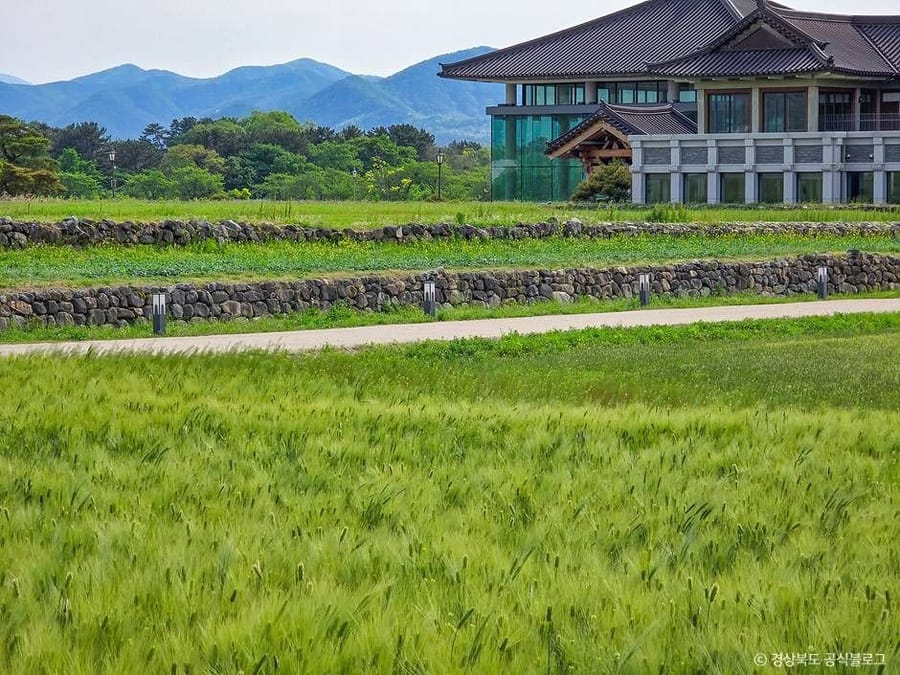
Hwangnyongsa Temple was built during the Silla Dynasty in the 6th century and was burned down and destroyed by the Mongol invasion in the 13th century during the Goryeo Dynasty. Currently, only the site remains, allowing one to infer its scale. It is estimated to be a large temple, covering an area of 8,800 pyeong, which is 8 times the size of Bulguksa Temple. Construction began by royal decree in 553 (the 14th year of King Jinheung of Silla), and its main halls were completed in 566. The Geumdang (main Buddha hall) was completed in 584 (the 6th year of King Jinpyeong). Hwangnyongsa, fully completed with the construction of its pagoda in 645 (the 14th year of Queen Seondeok), was the center of Silla's national protection Buddhism. Within the temple grounds of Hwangnyongsa stood the Hwangnyongsa Nine-story Wooden Pagoda, one of Silla's treasures. This pagoda was a symbol of Silla, completed in three years by the Baekje architect Abiji, upon the recommendation of the monk Jajangdaesa (Great Master Jajang) after his return from studying in Tang China. Currently, at the site where the nine-story wooden pagoda stood, the *simchoseok* (central foundation stone) remains, which supported the pagoda's central pillar. This temple was located to the east of Wolseong, the Silla royal palace. According to its founding record, King Jinheung intended to build a new palace in a low-lying area east of Wolseong. However, after seeing a yellow dragon ascend to heaven there, the king halted the construction of the new palace and ordered it to be made into a temple, thus giving it the name Hwangnyongsa (Yellow Dragon Temple). Because it was a national temple, successive kings often visited it, and it maintained its position as the foremost national temple of Silla. Even after the fall of Silla, it continued to be deeply revered and protected by the Goryeo Dynasty, and even received timber for the repair of its pagoda. However, in 1238 (the 25th year of King Gojong), during the Mongol invasion, not only the pagoda but all buildings were burned down and destroyed. In 1969, excavation of the lecture hall site uncovered the foundation stones of the Geumdang (main Buddha hall), lecture hall, and pagoda sites. From March 1976, an eight-year excavation revealed a unique temple layout known as "one pagoda, three main Buddha halls" (*iltap samgeumdang-sik*), and over 40,000 artifacts were unearthed. While the lower structures of the buildings, including the foundations, were confirmed, the upper parts could not be accurately verified. Therefore, a complete restoration was not possible, and only the foundation platform with its 64 cornerstone remains was restored. Adjacent to the Hwangnyongsa Temple site, there is the Hwangnyongsa Historical and Cultural Center. It comprises a 3D audiovisual room showcasing the process from the temple's construction to its destruction, and a Silla History Exhibition Hall displaying artifacts unearthed during excavations. On the first floor, a 1/10 scale model of the Hwangnyongsa Nine-story Wooden Pagoda is exhibited.