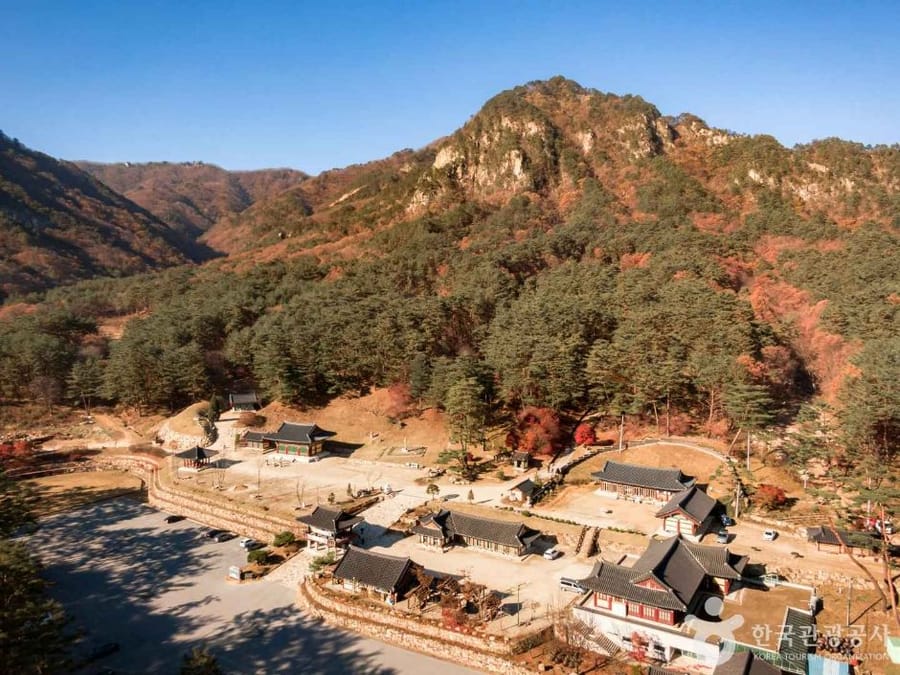
Beopheungsa Temple
法興寺- Era
- Founded 643 · 삼국시대
- Sect
- 조계종
- Feature
- 33 Avalokiteśvara Sacred Sites, 5 Great Buddha-Relic Shrines, District Head Temple
1352 Mureungbeopheung-ro, Suju-myeon, Yeongwol-gun, Gangwon Special Self-Governing Province
Founded 643 · 삼국시대조계종
0 visitors
Verify your visit to unlock challenges.
Temple information
Located at the foot of Saja Mountain in Yeongwol, Gangwon-do, Beopheungsa Temple was founded in 643, the 12th year of Queen Seondeok of Silla, by Monk Jajang, who wished for the prosperity of the nation and the well-being of its people. At that time, it enshrined the true sarira of the Buddha and began as Heungnyeongsa Temple. Later, Jinghyojeoljung, a disciple of the Silla Zen master Doyun, opened a Zen gate, establishing it as the central temple of Sajasanmun, one of the Gusan Seonmun (Nine Mountain Zen Schools). Even after being rebuilt in 1163 during the reign of King Uijong of Goryeo, it continued its Buddhist lineage through numerous destructions and reconstructions until the Joseon Dynasty, preserving its historical significance throughout the long ages. Beopheungsa Temple, surrounded by a lush pine forest, is one of Korea's five great Jeokmyeolbogung (temples enshrining the Buddha's sarira), where one can experience profound Buddhist culture amidst a tranquil atmosphere. Within its precincts remain three stone pagodas, a stone guardian Buddha statue, a hermit's cave where Monk Jajang practiced asceticism, and the Jeokmyeolbogung, hinting at the former grandeur of Heungnyeongseonwon. Furthermore, through various cultural heritage items such as the Saritap (stupa), Heungnyeongsa Jinghyodaesa Boin Pagoda, Jinghyodaesa Budo (stupa), and the site of Heungnyeongseonwon, one can explore the temple's profound history and tradition.