243 Dojang-gil (Dohak-dong), Dong District, Daegu Metropolitan City
Founded 832 · 통일신라
조계종
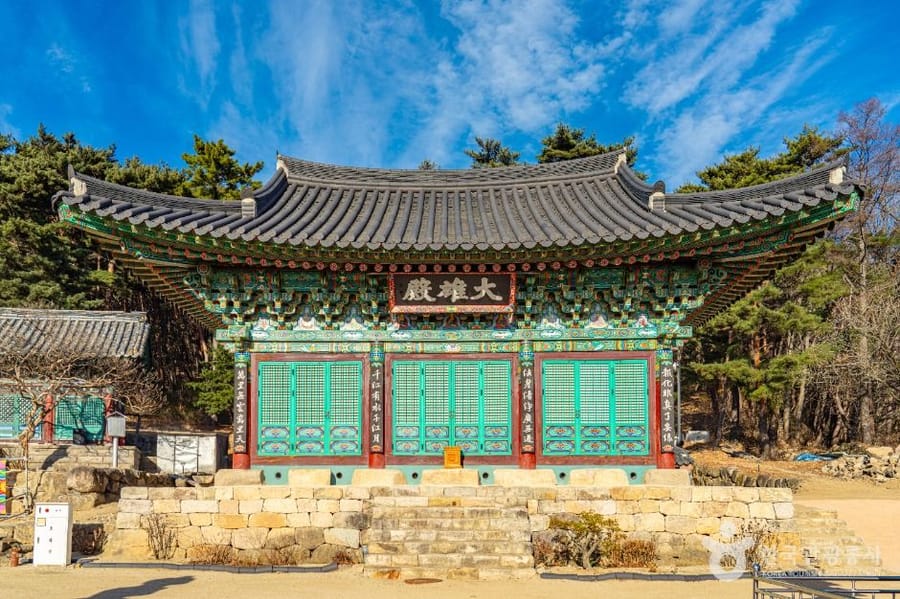
Bukjijangsa is currently a sub-temple of Donghwasa, the head temple of the 9th diocese of the Jogye Order of Korean Buddhism, located by a clear valley stream on Palgongsan Mountain. It is a historic temple recorded in the Samguk Yusa as "Gongsan Jijangsa," along with Donghwasa on Palgongsan Mountain, and is a twin-pagoda garama, typical of temples from the Unified Silla period. There is a founding legend that Monk Geukdalhwaseang established it in 485 (7th year of King Soji), and another theory that when Monk Yanghan founded Namjijangsa on Mt. Choejeongsan in Dalseong-gun in 684 (4th year of King Sinmun), the Jijangsa located on Palgongsan Mountain in Dohak-dong, Dong-gu, was named Bukjijangsa (North Jijangsa) because it was situated to the north when viewed from Daegu Metropolitan City. It appears that National Preceptor Bojo Jinul renovated it in 1192 (22nd year of King Myeongjong), but no history of the temple after this renovation has been passed down. However, considering that some roof tiles of the Daeungjeon bear inscriptions from the 4th year of Kangxi (1665) and others from 1623, it can be inferred that this temple was reconstructed in 1623 (1st year of King Injo) and repaired in 1665. The "Beomugo," compiled in 1799 (23rd year of King Jeongjo), also mentions Bukjijangsa being on Palgongsan Mountain. Furthermore, the "Gyeongsang-do Eupji," compiled in 1832 (32nd year of King Sunjo), records that Bukjijangsa, along with Cheongnyeonam and Domyeongam, belonged to Donghwasa, indicating changes in the temple's status. Existing temple buildings include Jijangjeon, Geuknakjeon (currently Daeungjeon), Samseonggak, Sansingak, and Cheonwangmun. Notably, Daegu Bukjijangsa Jijangjeon was once used as the Daeungjeon when the original Daeungjeon was destroyed by fire. Its construction year is 1623 (1st year of King Injo), with one bay on the front and extended bays on the sides. The bracketing system (gongpo) is of the Dapo style, with four steps (chulmok) inward and outward, well preserving the appearance of the mid-Joseon period. The interior structure is similar to that of a pavilion (jeongja), making it a unique example for a Buddhist temple building. The pagoda standing parallel to the east side of the Daeungjeon, facing south, is presumed to be from the Goryeo period. Originally, behind this pagoda was the site of a main dharma hall (beopdang), where numerous stone relics are scattered. In addition, in front of Jijangjeon stands the Jijangsa Yugongin Yeongse Bulmangbi (Stele for the Eternally Unforgettable Meritorious Figures of Jijangsa), and its inscription also records Jijangsa as an ancient temple from the Silla period. Having silently guarded the passage of time for so long on the slopes of Palgongsan Mountain, Bukjijangsa is currently the endpoint of Daegu Olle Palgongsan Course 1, perfect for enjoying the course on foot from Daegu Dong-gu Bangjja Yugi Museum. The path to Bukjijangsa offers a view of green pine forests all year round, and the fragrance from these pine forests lightens one's steps on the way to meet the Stone Seated Ksitigarbha Bodhisattva (Jijangbosal) of Bukjijangsa. Furthermore, Bukjijangsa features a pond, and the old, large willow trees around it seem to invite one to leave behind worldly worries once more.