Seokguram-ro 238, Gyeongju-si, Gyeongsangbuk-do, Republic of Korea
Founded 751 · 통일신라
대한불교조계종
국보 제24호, 유네스코 세계유산
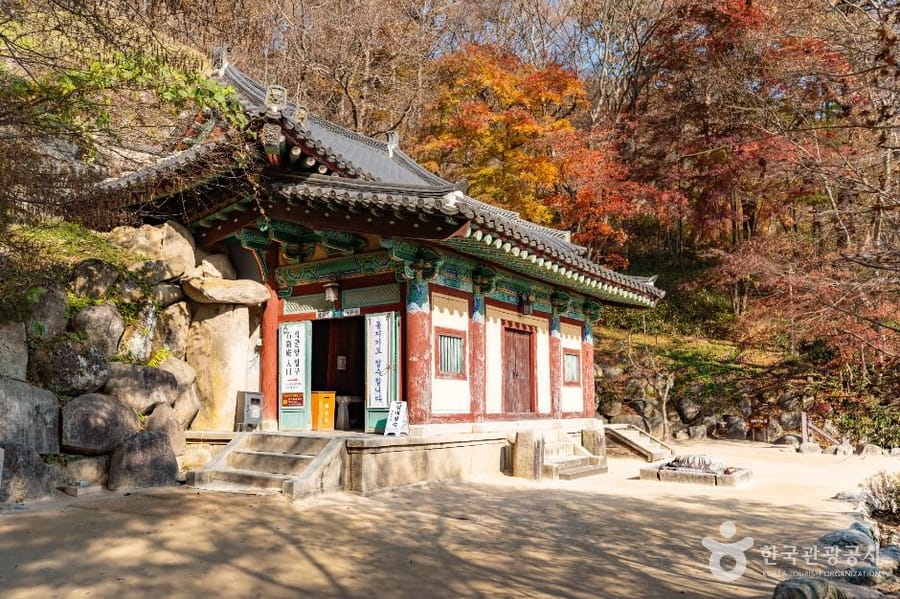
Seokguram Grotto (National Treasure) is said to have been founded by Kim Dae-seong, then prime minister, in the 10th year of King Gyeongdeok of Silla. The structure of Seokguram Grotto, located 3 km by mountain trail and 9 km by new road from Bulguksa Temple, achieves harmony between square and circular shapes, straight and curved lines, and flat and spherical surfaces. In particular, the 38 figures carved around the walls are all masterpieces, and through their overall harmony, they exhibit a high degree of philosophical and scientific character. In the center, the main Buddha statue, a seated Amitabha made of white granite, gazes out over the East Sea, and its line of sight is directed towards Daewangam Rock in front of Bonggil-ri, which is King Munmu's underwater tomb. Gamsansa Temple Site, which protected the underwater king, and Igyeondae Pavilion, where King Munmu was said to have transformed into a dragon, are located on the coast near Daewangam Rock. Bulguksa Temple and Seokguram Grotto were officially designated and protected as UNESCO World Cultural Heritage sites on December 6, 1995, along with the Tripitaka Koreana at Haeinsa Temple and Jongmyo Shrine. The red sun rising beyond the horizon from Seokguram Grotto, along with the sky and sea dyed red, creates a magnificent spectacle. After enjoying the sunrise from Seokguram Grotto, the Seokjang-ro road, which directly connects from Tohamsan Mountain to the East Coast, was opened in 1998, making it easy to access the seas off Gampo and Yangbuk. Enjoying raw fish (hoe) that boasts the taste of the nation's cleanest waters and visiting Gamsansa Temple Site and King Munmu's Royal Tomb will make for an even more wonderful trip.