Around Wolmyeongsa Temple

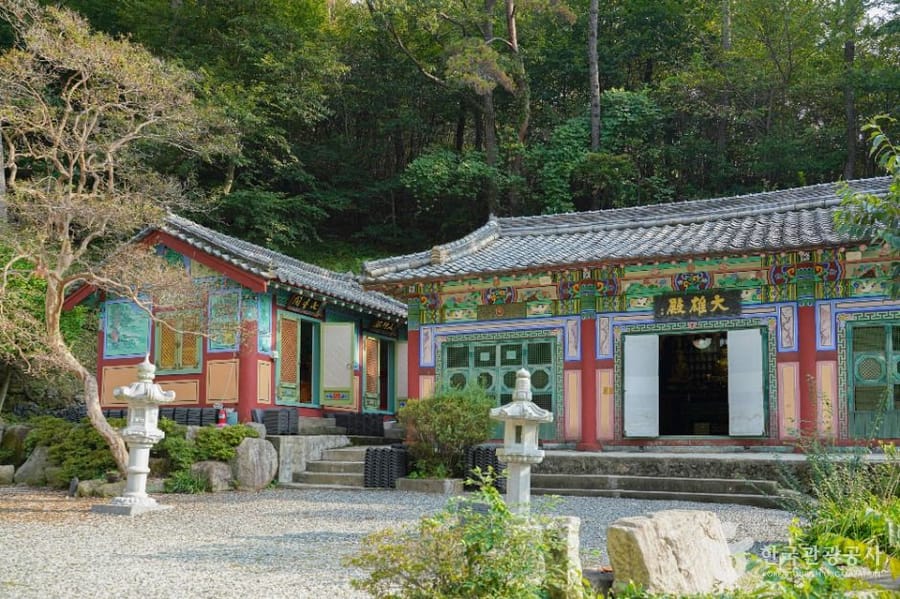
Wolmyeongsa Temple
Wolmyeongsa is located at the foot of Ilgwangsan Mountain in Ilgwang-myeon, Gijang-gun, Busan. The entrance to the temple begins from 'Samdeok Village', a community village for Hansen's disease patients. From Busan, you can either take National Road 14 through Bansong-dong to Gijang and Ilgwang-myeon, or pass through downtown Busan, then via scenic Haeundae, head towards Songjeong, Gijang, and Ilgwang-myeon. Ilgwangsan Mountain (日光山), which sits like a folding screen directly behind Ilgwang Beach, is famous for its sunset, known as Ilgwang Nakjo (日光落照), one of the Eight Scenic Views of Ilgwang, due to its especially beautiful setting sun. Wolmyeongsa, situated at the foot of Ilgwangsan Mountain, is a not-so-well-known Taego Order temple where, although it doesn't boast grand scale, one can discover charming and unpretentious aspects throughout its courtyards. According to a legend, it was a prayer site where Buddhist statues were enshrined and prayers were offered since ancient times, but currently, it is only known as a training monastery founded in 1882 by Monk Kim Beop-seong of Beomeosa Temple, with no notable records or artifacts to confirm this. The medicinal spring water gushing from the temple's well, known for its long-standing efficacy, is reputed as a miracle cure by locals, and Buddhist art artists friendly with Wolmyeongsa (月明寺) create their works here, making it pleasant to frequently spot Arhat statues and child monk statues throughout the temple grounds. Wolmyeongsa, where the sun of Ilgwangsan Mountain and the moon of Wolmyeongsa harmonize, sits naturally without defying the flow of nature. Although it doesn't have many devotees currently, it often serves as a resting place for hikers using the secluded walking course that starts from the temple grounds, which is neither steep nor rugged.