Gangseo-gu, Seoul
Founded · 고려
조계종
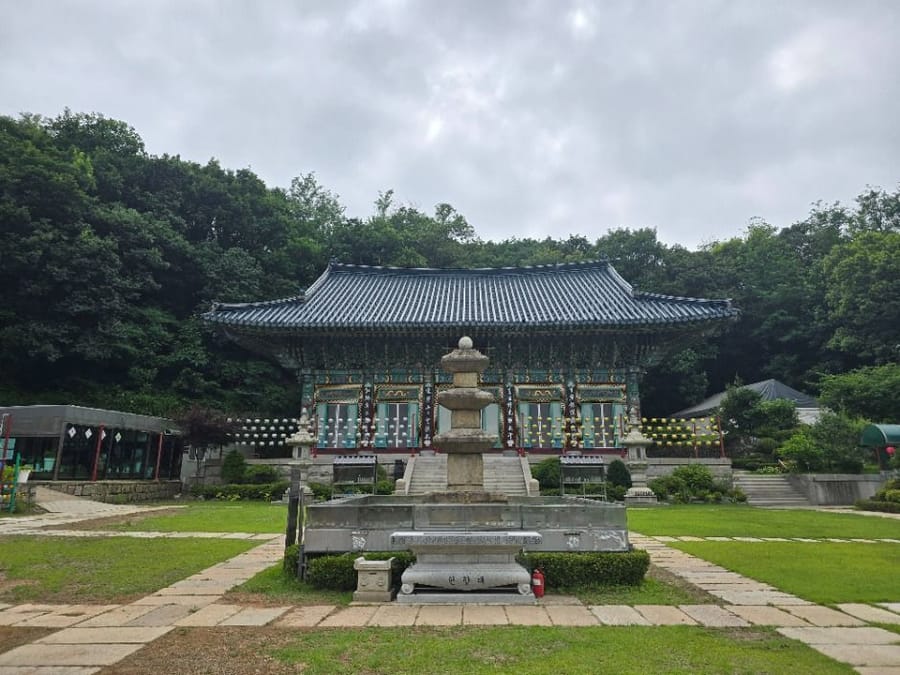
Yaksasa Temple on Gaehwasan Mountain is a temple directly administered by the Jogye Order of Korean Buddhism, located in Gangseo-gu, Seoul. In the center of the temple grounds stands the Three-story Stone Pagoda of Yaksasa, designated as Seoul Tangible Cultural Heritage, and inside the Daeungjeon (main hall), the Standing Stone Buddha of Yaksasa, also designated as Seoul Tangible Cultural Heritage, is enshrined, allowing us to infer its foundation history dating back to the late Goryeo Dynasty. The "Dongguk Yeoji Seungnam" (Augmented Survey of the Geography of Korea), completed in 1486 (the 17th year of King Seongjong's reign), states that Yaksasa Temple is located on Juryongsan Mountain. According to the "Yangcheon Eupji" (Gazetteer of Yangcheon County), written in the late Joseon Dynasty, a Taoist hermit named Juryong resided on this mountain during the Silla period, hence it was named Juryongsan Mountain; and after Master Juryong passed away, a strange flower bloomed, leading people to call it Gaehwasan Mountain. In 1737, Song In-myeong studied at Gaehwasa Temple, later became a high official, and for that reason, he renovated the temple; after the reign of King Sunjo, it was renamed Yaksasa. According to the "Gaehwasan Yaksasa-am Junggeon-gi" (Record of the Reconstruction of Yaksasa Hermitage on Gaehwasan Mountain) written by Song Suk-ok in 1827, it was referred to as Yaksasa Hermitage and recorded as an ancient temple from the Three Kingdoms period. Gyeomjae Jeong Seon (1676-1759), a painter of the late Joseon Dynasty, also depicted the temple and its surrounding scenery under the title "Gaehwasa." In 1911, due to the Japanese colonial government's Temple Ordinance, Yaksasa Hermitage temporarily became a branch temple of Bongeunsa Temple. In 1928, Ven. Wonpyo renovated the Yaksajeon (Medicine Buddha Hall), and in 1984, Ven. Seolho renovated it again; in 1988, the monks' living quarters (yosachae) and the Beomjonggak (bell pavilion) were newly constructed.