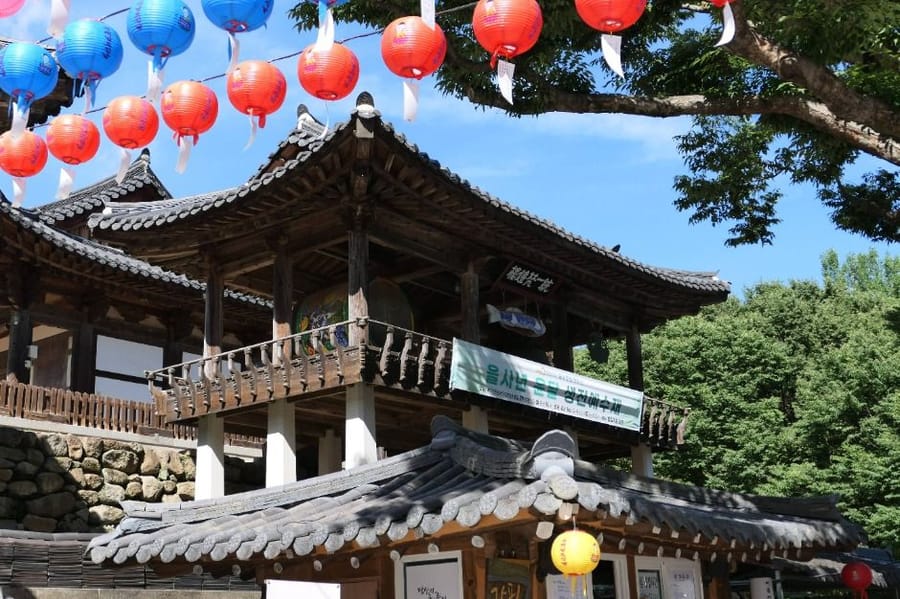
Donghwasa Temple
桐華寺- Era
- Founded 493 · 삼국시대
- Sect
- 조계종
- Feature
- 33 Avalokiteśvara Sacred Sites, District Head Temple, Temple Cuisine Specialty, Thousand-Year-Old Temple
1 Donghwasa1-gil (Dohak-dong), Dong District, Daegu Metropolitan City
Founded 493 · 삼국시대조계종
0 visitors
Verify your visit to unlock challenges.
Temple information
Donghwasa Temple is a historic ancient Silla temple situated in Donghakdong Valley, where Pokpogol, Bindaegol, and Susutgol valleys converge from left and right on Palgongsan Mountain. It is the head temple of the 9th district of the Jogye Order of Korean Buddhism. It was founded by Geukdan in 493 (15th year of King Soji's reign) and was called Yugasa. Afterwards, Royal Preceptor Simji rebuilt it in 832 (7th year of King Heungdeok's reign), and it is said that even though it was winter at the time, paulownia flowers bloomed in full around the temple, so it was renamed Donghwasa. Most of the existing halls and pavilions were built during the reconstruction in King Yeongjo's reign, including Daeungjeon, Yeongyeongjeon, Cheontaeak, Yeongsanjeon, Bongseoru, Simgam Dang, Chilseonggak, Sansingak, Eunghyanggak, Woneumgak, and Cheonanmun. There are also subsidiary hermitages such as Geumdangam, Biroam, Naewonam, Budoam, Yangjinam, and Yeombulam. Furthermore, Donghwasa Temple is the gateway where various hiking trails of Palgongsan National Park begin. Hiking trails leading to nature are open from various spots within the temple, including a course passing Yeombulam Hermitage and heading towards Yeombulbong Peak or Dongbong Peak, a course climbing the ridge along Bindaegol Valley, and courses from the Temple Stay entrance following Pokpogol Valley towards Domajae (Sillyeongjae) or Bareunjae. Many people visit throughout all four seasons, as it's a great place for walking along the scenery of the mountains and valleys.