Dado-myeon, Naju-si, Jeollanam-do
Founded 384 · 삼국시대
조계종
덕룡산, 대웅전(보물)
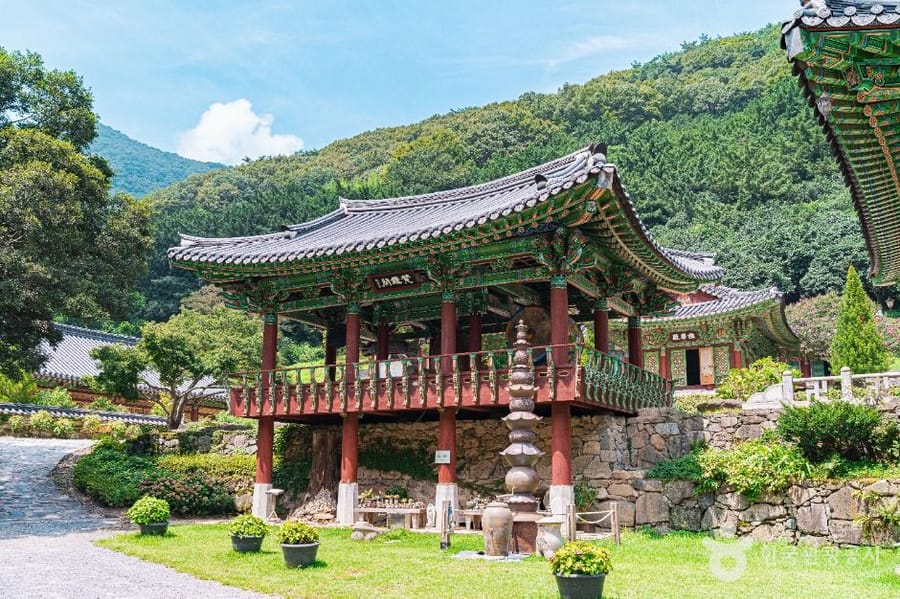
Bulhoesa Temple, a branch temple of Baegyangsa, is situated on the middle slopes of Deokryongsan Mountain, with the site of Unheungsa Temple and a mountain separating them. It was founded in 366 CE, the first year of Taihua of the Eastern Jin Dynasty, by the Indian monk Marananta. It was rebuilt a second time by Master Heeyeon, and a third time by National Preceptor Wonjin in the second year of King Taejong of Joseon (1402). After most of its buildings were destroyed by a large fire in the 22nd year of King Jeongjo (1789), it was reconstructed in 1800. The name Bulhoesa means "Assembly of the Buddha," signifying a place where the Three Jewels (Buddha, Dharma, and Sangha) are in harmony, and the teachings of the Buddha never cease. Bulhoesa Temple may not possess immediate striking splendor, but it captivates people with its secluded atmosphere. The Daeungjeon (National Treasure), Myeongbujeon, Samseonggak, Nahajeon, and monks' quarters are neatly arranged, backed by a camellia forest. It is also an area where autumn leaves change color latest, and their hues are the most beautiful in the vicinity. Among the Three Buddhas enshrined in the Daeungjeon, the Vairocana Buddha is famous for being a "paper Buddha" made of paper. At the temple entrance stands a pair of stone *jangseung* (village guardian poles), believed to have been made around the 45th year of King Sukjong (1719). These guardian deities prohibit impurity and prevent the entry of evil spirits. The grandfather *jangseung* has bulging eyes and a deeply furrowed brow, creating a humorous expression unique to the southern region. The grandmother *jangseung* has a smiling expression, as if welcoming visitors to the temple, an expression exactly like that of a warm and affectionate grandmother. The grandfather *jangseung* is 2.3 meters tall, and the grandmother *jangseung* is 1.7 meters tall. Bulhoesa's green tea was first cultivated when Master Marananta, who first introduced Buddhism to the Three Han states 1600 years ago, came to Deokryongsan Mountain, founded Bulhoesa Temple, and brought tea seeds here. The tea plants still grow beneath nutmeg yew trees in their original form, and the tea made from these natural tea leaves was named Biroda (榧露茶). Biroda tea is made by gathering naturally growing tea leaves from Deokryongsan Mountain and adhering to a traditional tea-making method passed down continuously from senior monks, specifically the method of stir-frying the tea nine times.