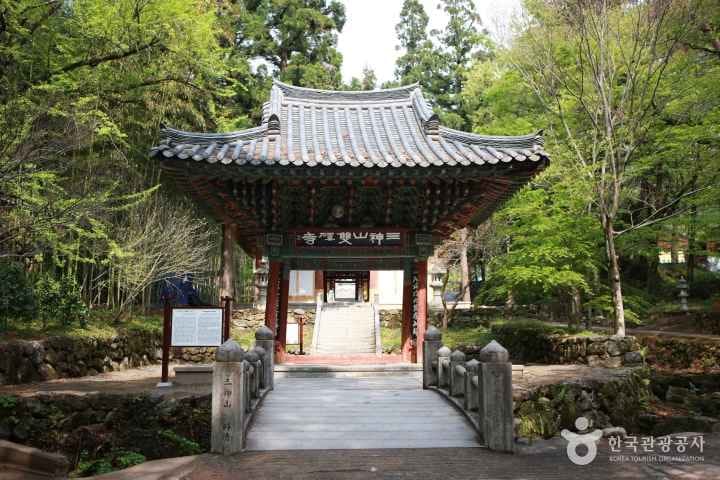
Ssangyesa Temple (Hadong)
雙磎寺- Era
- Founded 722 · 통일신라
- Sect
- 조계종
- Feature
- 33 Avalokiteśvara Sacred Sites, District Head Temple, Thousand-Year-Old Temple
59 Ssanggyesagil, Hwagae-myeon, Hadong County, South Gyeongsang Province
Founded 722 · 통일신라조계종
0 visitors
Verify your visit to unlock challenges.
Temple information
Ssanggyesa Temple was built during the 21st year of King Seongdeok of Silla when Ven. Sambeop returned after his studies abroad, bringing and enshrining the sarira of Huineng, the Sixth Patriarch of Chinese Seon Buddhism. In the 2nd year of King Munseong (840 AD), Seon Master Jingam Hyejo renamed it Okcheonsa, but it was changed back to Ssanggyesa in the 2nd year of King Jeonggang. Ssanggyesa, which was burned down during the Imjin War, was rebuilt by Great Master Byeogam in the 10th year of King Injo (1632). Notable attractions include Ssanggyesa's particularly famous cherry blossoms, the Ssanggye Seokmun (Stone Gate) personally inscribed by Goun Choe Chi-won, the Stele for Seon Master Jingam (Jingam Seonsa Daegongtapbi), a natural elm tree in the courtyard of Guksaham to the north, and Buril Falls, which is nestled between the two valleys of Cheonghakbong and Baekhakbong peaks to the northeast. Ssanggyesa also has a deep connection with tea. It is said that in the 3rd year of King Heungdeok of Silla (828 AD), Kim Daeryeom, who served as an envoy to the Tang Dynasty, first brought tea plant seeds and planted them by royal command in the Ssanggyesa area on the southern side of Jirisan Mountain. A monument commemorating the first planting of tea (Cha Sibe Chuweonbi) stands just before Iljumun Gate, and there is also a monument marking the original tea cultivation site in the village tea fields.