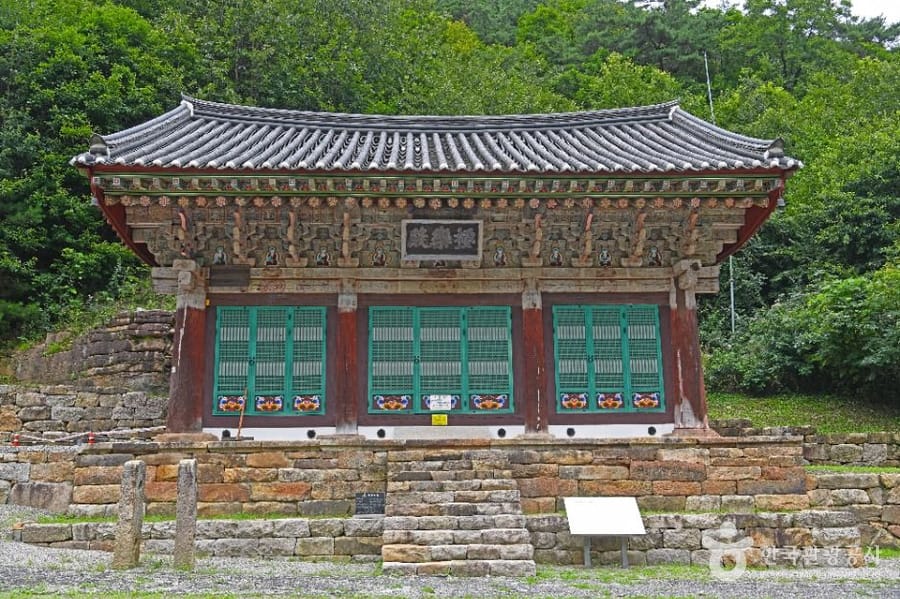
Silleuksa Temple (Jecheon)
- Era
- Founding period unavailable · 삼국시대
- Sect
- 조계종
- Feature
- Thousand-Year-Old Temple
180 Wolaksan-ro 4-gil, Deoksan-myeon, Jecheon City, North Chungcheong Province
Founding period unavailable · 삼국시대조계종
0 visitors
Verify your visit to unlock challenges.
Temple information
Sinneuksa Temple is located on the eastern foothills of Mt. Woraksan. Although there is no clear information about its founding, according to "Woraksan Sinneuksa Temple Renovation Record" written during the renovation of its main hall, Geungnakjeon, in 1960, it was founded by Master Ado in the 4th year of King Jinpyeong of Silla (582 AD), but this is not certain. Subsequently, it is said to have been rebuilt by Great Master Wonhyo during the reign of King Munmu of Silla (reigned 661-681), and again by Great Master Muhak during the Goryeo period under King Gongmin. Furthermore, it is said that Great Master Samyeong rebuilt it during the reign of King Gwanghaegun of Joseon (reigned 1608-1623), bringing it to its present state. Considering these records along with the three-story stone pagoda, stone artifacts, and Geungnakjeon Hall remaining at the temple, it appears that Sinneuksa Temple was founded in the late Silla or early Goryeo period. However, its history from the Goryeo period to the early Joseon period is entirely unknown. It was rebuilt in the late Joseon period after the Imjin War. While there likely were several renovations after its founding, it seems to have remained a ruined temple for a considerable period before this reconstruction. Even after its reconstruction, judging by the temple grounds and existing buildings, its scale appears to have been modest. According to tradition, it has been used as a Zen monastery from about 60 years ago. In 1960, Geungnakjeon Hall, which had deteriorated due to the Korean War, was renovated, and in 1981, the three-story stone pagoda was dismantled and repaired. Subsequently, in recent times, beginning with the construction of Sansingak in 2001, Yaksa-dang and Yosa (monks' quarters) were newly built, giving it its current appearance. Sinneuksa Temple houses the three-story stone pagoda designated as a Treasure, and the wooden seated Amitabha Buddha statue, Boddhisattva statues, Geungnakjeon murals, and dancheong designated as Chungcheongbuk-do Tangible Cultural Heritage.