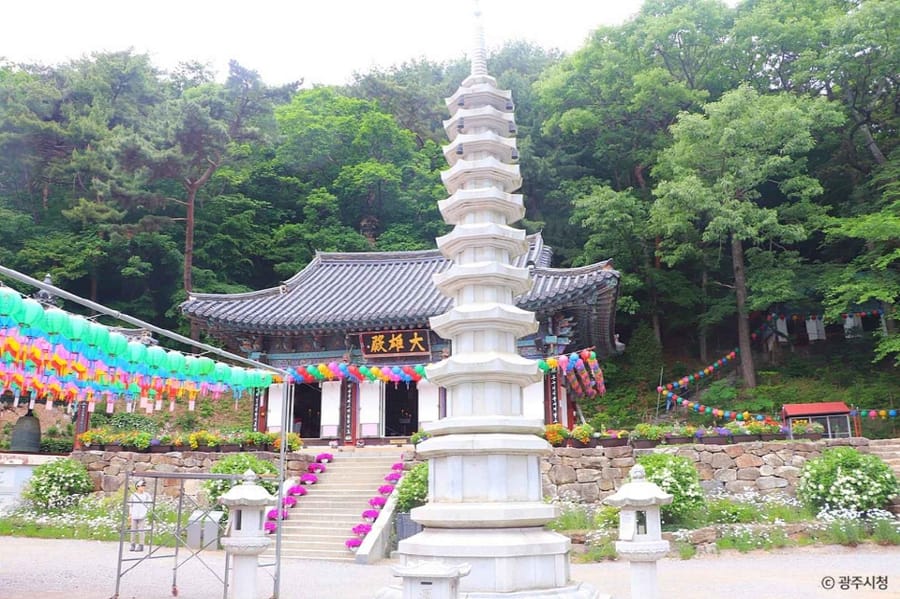
Janggyeongsa Temple at Namhansanseong Fortress

Janggyeongsa Temple at Namhansanseong Fortress長慶寺

Namhansanseong-myeon, Gwangju-si, Gyeonggi-do

Founded 1624 · 조선

조계종

남한산성 내, 승군 관련

Janggyeongsa Temple is located within Namhansanseong Fortress, which is inscribed as a UNESCO World Heritage site. It was built at the same time Namhansanseong Fortress was constructed. Monk soldiers (僧軍; an army composed of monks formed during national crises like war), who played a significant role during the Japanese invasions of Korea (Imjin War), continued to undertake various tasks according to the needs of the state even after the war. Namhansanseong Fortress itself was a large-scale mountain fortress newly built south of Seoul by mobilizing monk soldiers under the leadership of Monk Byeogam Gakseong to prepare for the rising power of the Later Jin (後金) in the north at that time. To accommodate the monk soldiers who came from all over the country, seven temples were built within the fortress in addition to the existing Mangwolsa and Okjeongsa temples, and Janggyeongsa was one of them. Even after the construction was completed, the monk soldiers were responsible for managing and defending the fortress, living as both monks and soldiers while staying in the nine temples. In 1907, when the army of the Korean Empire was disbanded by imperial Japan, most of the temples, which served as garrisons for the monk soldiers, were destroyed along with the military facilities of Namhansanseong Fortress. However, Janggyeongsa was the only temple to escape this fate. Although it suffered significant damage from a fire in 1975, it was restored and exists to this day. Janggyeongsa Temple is located about halfway up Mangwolsan Peak, north of Jwaikmun Gate, the east gate of Namhansanseong Fortress. Many people entered and exited through the fortress's First Ammun (secret gate). This temple still retains Daeungjeon (the main hall enshrining Sakyamuni Buddha), a *yosa* (monks' living quarters) where monks resided, Jinnamru (a gate pavilion), and Chilseonggak (a small shrine). A distinctive feature is that the *yosa* is larger than the prayer hall (Buddha hall), reflecting its past as a garrison for monk soldiers. (Source: National Heritage Administration website)

10km