Hoeam-dong Neighborhood, Yangju City, Gyeonggi Province
Founded 1328 · 고려
-
천보산, 조선 최대사찰터(폐사지)
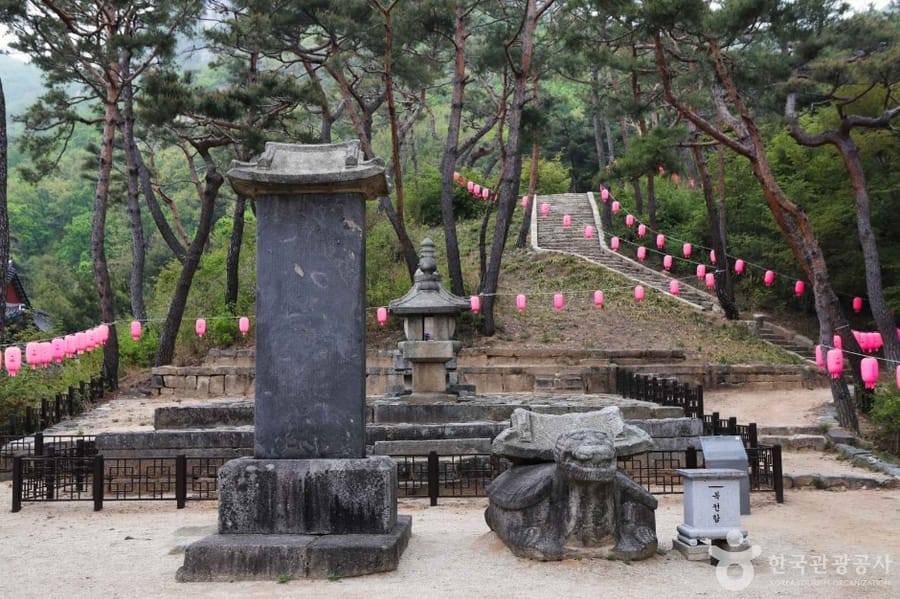
The Yangju Hoeamsa Temple Site, located near Yangju Okjeong New Town, is the largest royal temple and a representative Seon (Zen) Buddhist temple site from the late Goryeo and early Joseon periods. Its founding is estimated to be the 12th century based on records. In the 14th century, it was rebuilt by Monk Naong, following the teachings of Zen Master Jigong, an Indian monk who resided at Hoeamsa in the late Goryeo period and propagated Buddhism. During the Joseon Dynasty, Grand Master Muhak stayed there, and King Taejo Yi Seong-gye frequently visited. After abdicating as King Emeritus, he resided there. Subsequently, Grand Prince Hyoryeong, Queen Jeonghui (King Sejo's consort), Queen Munjeong (King Jungjong's consort), and others undertook large-scale Buddhist projects at Hoeamsa, making it the foremost temple in the nation. It served as the central hub of Joseon royal Buddhism until the 17th century, even housing a royal ancestral tablet shrine (eosil) where ancestral tablets of successive kings and queens were enshrined. However, not long after Queen Munjeong's death, it was abandoned due to anti-Buddhist policies and a fire of unknown cause. Excavations at the Yangju Hoeamsa Temple Site have confirmed that it featured architectural elements akin to a palace, unlike typical temples, and exhibited characteristics of Seon Buddhist temples prevalent in East Asia during the 13th-14th centuries. The discovery of numerous precious artifacts, such as roof tiles and ceramics used exclusively by the royal family, attests to its high status and prestige. The Hoeamsa Temple Site is home to the steles and stupas of the three revered monks — Jigong, Naong, and Muhak. Among these, the Stupa of Grand Master Muhak at Yangju Hoeamsa Temple Site (designated as a Treasure) and the Twin Lion Stone Lantern in front of it are considered the most outstanding masterpieces among early Joseon stupas. These were pre-built by King Taejo Yi Seong-gye for Grand Master Muhak during his lifetime. Additionally, the Stele of Seongak Wangsa, erected in 1377 (the 3rd year of King U of Goryeo), is an important historical document demonstrating the level of Clerical Script in Korea. Damaged by a wildfire on Cheonbosan Mountain in 1997, the original is preserved at the Central Buddhist Museum, while a replica now stands on its original turtle pedestal at the site. From the Hoeamsa Temple Site observatory, visitors can observe over 70 temple foundations across 8 terraces within a vast area of approximately 33,000 square meters (10,000 pyeong), with ondol (traditional underfloor heating) facilities identified in about 40 of these structures. Furthermore, the Yangju Municipal Hoeamsa Temple Site Museum is located at the entrance to the site, offering a view of the excavated artifacts. It takes approximately 4 minutes by car from Songchu IC. Nearby attractions include the Jangheung Tourist Area (housing the Cheongam Folk Museum, Gana Art Center, Duriland, Yangju Municipal Chang Ucchin Museum of Art, Yangju Municipal Min Bokjin Museum of Art, Songam Space Center, Jangheung Wildflower Arboretum, etc.), Songchu Amusement Park, Ilyeong Amusement Park, Bukhansan National Park, the National ASEAN Natural Recreation Forest, and the Feelux Lighting Museum.