Around Bohyeonsa Temple (Gangneung)

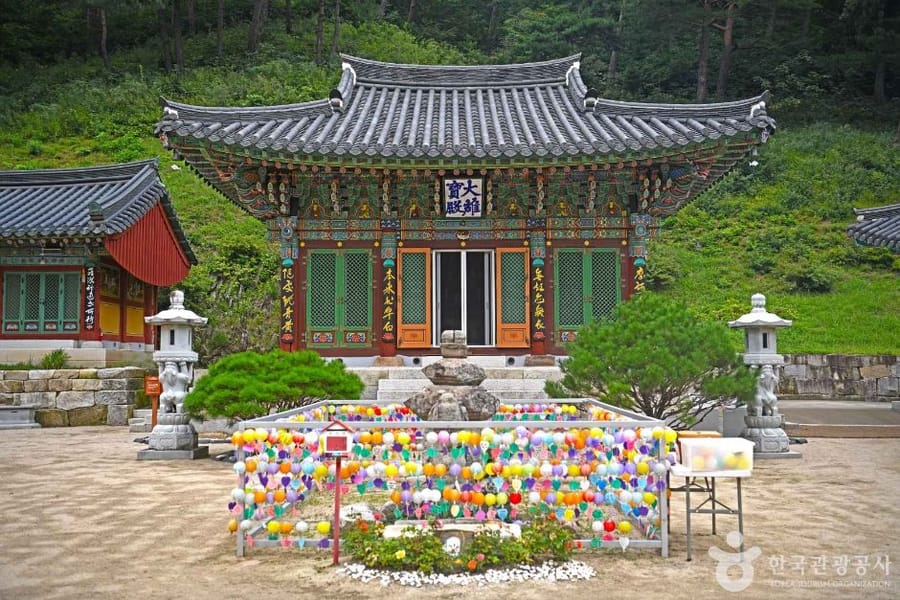
Bohyeonsa Temple (Gangneung)
Bohyeonsa Temple is a branch temple of Woljeongsa Temple, the head temple of the 4th district of the Jogye Order of Korean Buddhism. Located directly beneath Daegwallyeong and Seonjaryeong passes, Bohyeonsa Temple boasts outstanding surrounding scenery due to its high mountainous terrain. Its various halls, such as Daeungjeon (Main Buddha Hall), Yeongsanjeon (Hall of Vimalakirti), Jijangjeon (Hall of Ksitigarbha), Samseonggak (Hall of Three Sages), and Geumgangnu (Diamond Pavilion), are harmoniously integrated with nature according to architectural principles, allowing visitors to fully experience the profound atmosphere of a mountain temple. A legend is told about the founding period of Bohyeonsa Temple, stating that Bodhisattva Samantabhadra founded it. However, it was formally established in 650 (4th year of Queen Jindeok's reign) by the monk Jajang Yulsa. Furthermore, in 889 (3rd year of Queen Jinseong's reign), it was significantly reconstructed by Master Nangwon under the name 'Jijang Seonwon' (Ksitigarbha Seon Center), after which Bohyeonsa Temple fully took on the appearance of a proper temple and prospered. Master Nangwon was a great monk who succeeded the dharma lineage of National Preceptor Beomil, the founder of the Sagulsanmun school. When National Preceptor Beomil passed away in 889, Master Nangwon erected a stupa and stele and resided at Bohyeonsa Temple with the support of Mingyu Alchan. Bohyeonsa Temple preserves Daeungbojeon (Main Buddha Hall), Samseonggak, and Yeongsanjeon, which are designated as Tangible Cultural Heritage of Gangwon Special Self-Governing Province. The Amitabha Triad enshrined within Daeungbojeon, created in the late Joseon Dynasty, are revered as benevolent figures, approachable not only to Buddhist devotees but also to the general public, attracting many pilgrims. The buildings, including the Daeungjeon, are in the architectural style of the early Joseon Dynasty and are said to be the oldest temple in the Yeongdong region.