Seongsan-myeon, Gangneung City, Gangwon Special Self-Governing Province
Founded 650 · 삼국시대
조계종
낭원대사탑(보물)
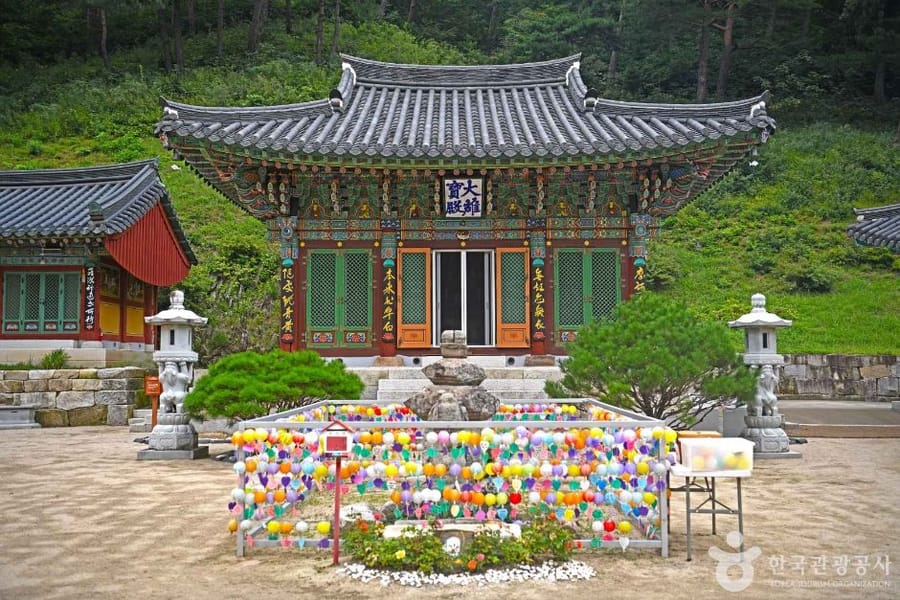
Bohyeonsa is a sub-temple of Woljeongsa, the head temple of the 4th district of the Jogye Order of Korean Buddhism. Bohyeonsa is situated directly below Daegwallyeong and Seonjaryeong, and its high mountainous terrain offers exceptional surrounding scenery. The temple buildings such as Daeungjeon, Yeongsanjeon, Jijangjeon, Samseonggak, and Geumgangnu harmonize beautifully with nature, adhering to Buddhist architectural traditions, allowing visitors to fully immerse themselves in the profound tranquility of a mountain temple. A legend is passed down regarding the founding period of Bohyeonsa. Bohyeonsa, where a legend tells of its founding by Bohyeon Bosal (Samantabhadra Bodhisattva), was actually established by Monk Jajang Yulsa in 650 AD (the 4th year of Queen Jindeok's reign). Furthermore, in 889 AD (the 3rd year of Queen Jinseong's reign), it was extensively rebuilt by Grand Master Nangwon under the name ‘Jijangseonwon,’ at which point Bohyeonsa assumed the proper form of a Buddhist temple and began to prosper. Grand Master Nangwon was a great monk who inherited the dharma lineage of National Preceptor Beomil Guksa, the founder of the Sagulsanmun school. When National Preceptor Beomil passed away in 889 AD, Nangwon erected a stupa and stele in his honor and, with the support of Mingyu Alchan, took up residence at Bohyeonsa. At Bohyeonsa, Daeungbojeon, Samseonggak, and Yeongsanjeon, designated as Tangible Cultural Heritage of Gangwon Special Self-Governing Province, have been preserved since ancient times. The Amitabha Triad Buddha statue enshrined within the Daeungbojeon, a benevolent image created in the late Joseon Dynasty, possesses an approachable appearance for both Buddhist devotees and the general public, attracting a continuous stream of visitors. The buildings, including the Daeungjeon, are in the architectural style of the early Joseon Dynasty, and it is said to be the oldest temple in the Yeongdong region.