Around Boriam

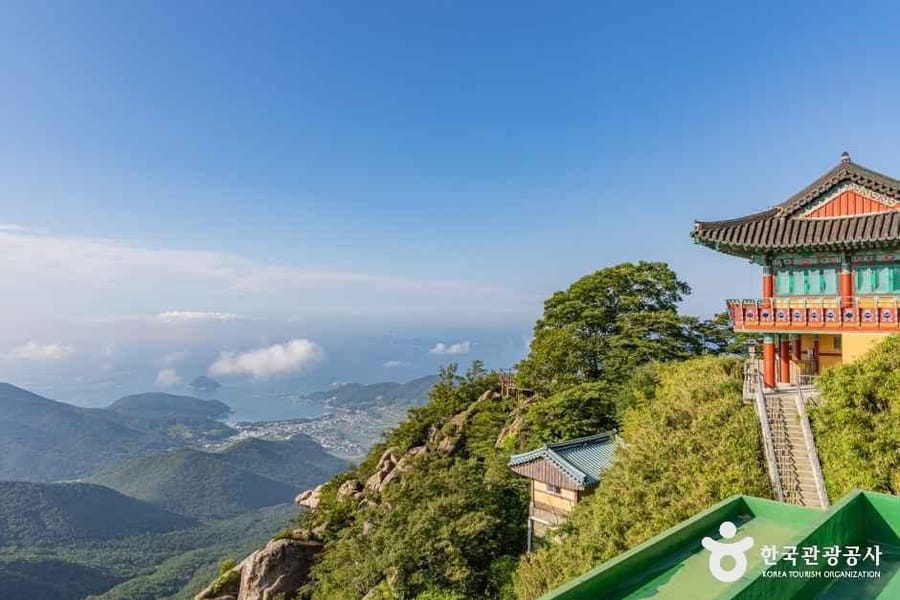
Boriam
Founded in 683 by Ven. Wonhyo, who built a hermitage, practiced asceticism, and encountered Avalokiteshvara Bodhisattva, originally naming the mountain Bogwangsan and the hermitage Bogwangsa. Later, it is said that Yi Seong-gye prayed here for 100 days before establishing the Joseon Dynasty. In gratitude, King Hyeonjong designated it a royal wish-granting temple in 1660, renaming the mountain Geumsan and the temple Boriam. Situated atop Geumsan, Boriam offers breathtaking views of the mountain's unique rock formations and the azure Southern Sea. Highlights within the temple grounds include Jwaseondae Rock, where Ven. Wonhyo meditated, and the nearby Ssanghongmun rock cave, known as the best of Geumsan's 38 scenic spots. Boriam is one of Korea's three great prayer sites, alongside Hongyeonam Hermitage of Naksansa Temple in Yangyang-gun, Gangwon-do, and Bomunsa Temple in Ganghwa-do, Gyeonggi-do, attracting daily streams of devotees. Geumsan, often called the “Rock Zoo” due to its outstanding scenery and numerous animal-shaped rocks, is considered the “Diamond Mountain of the Southern Sea.” Boriam, the most renowned of the three great prayer sites, is located on Geumsan's summit, offering views of the indigo sea and green fields, allowing visitors to fully appreciate the beauty of Hallyeohaesang National Park. Geumsan's rocks are steeped in Buddhist legends, and Boriam itself is surrounded by unique rock formations like Daejangbong Peak, Hyeongnyiam Rock, Hwaeombong Peak, Ilwolbong Peak, and Samburam Rock. The hiking trail from Sangju Village's Geumsan entrance to Boriam is a superb course, blending dense forests with views of the Southern Sea. An overnight stay to witness the sunrise from Geumsan is a magnificent experience, inspiring a feeling of harmony between heaven and earth. For drivers, a road extends past Aengganggogae Pass, through Buksigol in Idong-myeon, past Bokgok Reservoir, and up to the 80% mark of Geumsan's ridge.