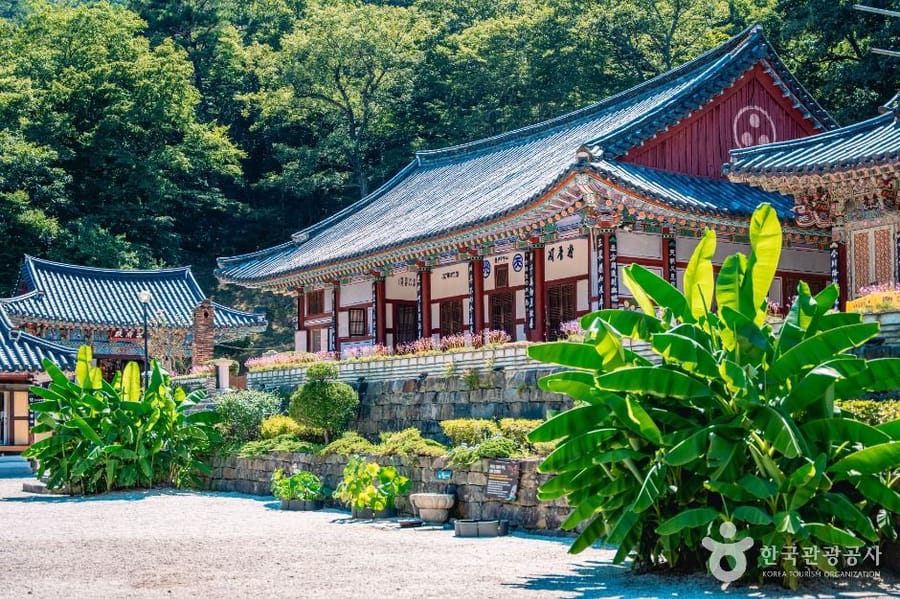
Daewonsa Temple (Sancheong)

Daewonsa Temple (Sancheong)大源寺

455 Daewonsa-gil Road, Samjangmyeon Township, Sancheong County, South Gyeongsang Province

Founded 548 · 삼국시대

조계종

지리산, 비구니 수행도량

Book Templestay

Below the eastern peak of Cheonwangbong on Jirisan Mountain, Yeon-gi-josa founded Pyeongwonsa in the 9th year of King Jinheung, the 24th monarch of Silla (548 AD). After being closed for over a thousand years, Ungwon Seonsa brought his disciples in the 11th year of King Sukjong of the Joseon Dynasty and established a temple on the old site of Pyeongwonsa, renaming it Daewonam. He established a training ground for Seon Buddhism and sutra study, making it a prominent lecture hall in Yeongnam. In the 27th year of King Gojong of the Joseon Dynasty, the hermitage of Hyeheun Seonsa collapsed and was extensively rebuilt. The Josayeongdang (hall for ancestral portraits) was repaired in the west, and a bangjangsil (abbot's quarters) and a lecture hall were built in the east, renaming the temple Daewonsa. It is said that eminent monks were invited to give sermons, attracting practicing monks from all over the country. On the night of January 12, 1914, the temple was completely destroyed by fire again. Several monks undertook its reconstruction, and by 1917, they had built 12 buildings comprising 184 kan (bays), including a main hall (Jeon), a pavilion (Nu), a lecture hall (Dang), various subsidiary halls (Gak), and monastic living quarters (Yosachae). It lay abandoned and in ruins due to events like the Yeosu-Suncheon Rebellion and the Korean War. In September 1955, the bhikkhuni Beopil Hwasang was appointed as the head monk (juji), and by 1986, she had built the Daeungjeon (Main Buddha Hall), Sarijeon (Hall of Relics), Cheongwangjeon, Wontongbojeon (Hall of Avalokiteshvara), Bongsangnu (Pavilion), Beomjonggak (Bell Pavilion), and Myeongbujeon (Hall of the Ten Kings of Hell), bringing it to its present state. Near the temple are Geoyeonjeong Pavilion and Gunjajeong Pavilion, where scholars of old are said to have studied. Furthermore, Daewonsa Valley, stretching approximately 2km from the Daewonsa entrance parking lot to the temple itself, boasts not only high mountains and clear water, but also the water gushing from between rock crevices and the strange-shaped rocks, creating a magnificent sight. Also located here are Yongso (Dragon Pond), where a dragon is said to have lived for 100 years before ascending to heaven, and Somakgol, where King Guhyeong, the last king of Garakguk, is said to have come and fed his cows and horses.