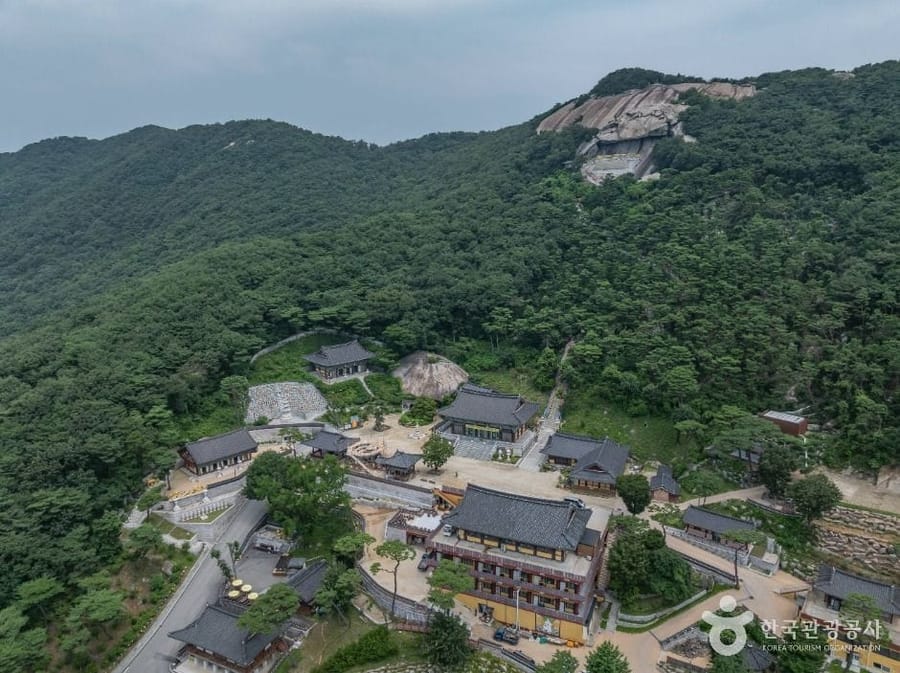
Bomunsa Temple

Bomunsa Temple普門寺

44 Samsannamnaro 828beon-gil Street, Ganghwa County, Incheon Metropolitan City

Founded 635 · 삼국시대

조계종

Bomunsa Temple, located on Nakgasan Mountain on Seokmodo Island, west of Ganghwa-do, is said to have been founded in 635 AD during the Silla Dynasty by Master Hoejeong, who, after encountering Avalokiteshvara Bodhisattva while practicing asceticism on Geumgangsan Mountain, came down to Ganghwa-do. At the time of its founding, the mountain was named Nakgasan, taking the name from the mountain where Avalokiteshvara Bodhisattva is said to reside. The temple was named Bomunsa, symbolizing the vast and boundless vows of Avalokiteshvara Bodhisattva, and has been known by that name ever since. Along with Naksansa Temple in Yangyang and Boriam Hermitage in Geumsan, which are known as sacred Gwaneum (Avalokiteshvara) holy sites in Korea where Avalokiteshvara Bodhisattva is believed to reside, Bomunsa Temple is one of Korea's three major maritime Avalokiteshvara prayer sites (places where people pray to Avalokiteshvara Bodhisattva). The anecdote of establishing the Nahanjeon (Arhat Hall) in 649 AD, 14 years after Bomunsa's founding, is famous: 22 stone statues, including Sakyamuni Buddha and Maitreya Bodhisattva, were retrieved from the sea and enshrined in a stone cave temple. It is also called Sintonggul (Cave of Miracles) due to the many miraculous powers it has shown through prayers. The Rock-carved Avalokiteshvara Bodhisattva, designated as Incheon Metropolitan City Tangible Cultural Heritage and located below Nunseopbawi (Eyebrow Rock) on the mid-slope of Nakgasan Mountain, is said to watch over sentient beings while gazing at the wide-open West Sea, attracting many Buddhist devotees.