37-41 Jeondeungsa-ro Road, Gilsangmyeon Township, Ganghwa County, Incheon Metropolitan City
Founded 381 · 삼국시대
조계종
삼랑성, 한국 현존 최고(最古) 사찰 추정
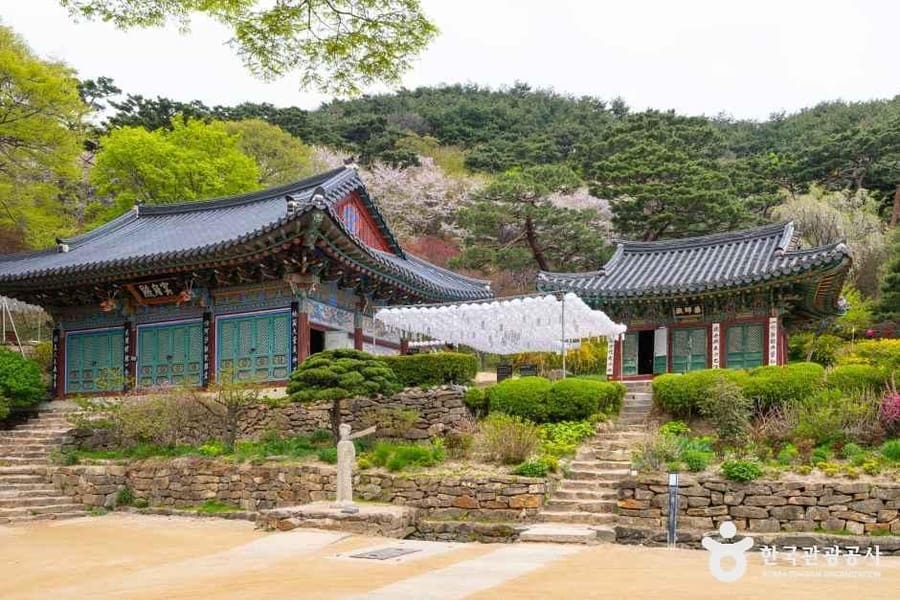
Jeondeungsa Temple has the longest history among existing Korean temples, and it is a temple that preserves history and authority as a fundamental training ground for Hoguk Bulgyo (Buddhism for national defense) that protected the nation with the Buddha's divine aid. As recorded in the 'Sejong Sillok Jiriji' (Geographical Treatise of King Sejong's Annals), Samrangseong Fortress was an ancient earthen fortress built by Dangun, who ordered his three sons (三郞) to construct it, and during the Three Kingdoms period, a stone fortress was built on the site of the earthen fortress, continuing to this day. It is said that Jeondeungsa Temple was founded in 381 CE (the 11th year of King Sosurim of Goguryeo). The person who first founded Jeondeungsa Temple was Monk Ado Hwasang, who came from the Jin Dynasty. At that time, Monk Ado Hwasang is known to have introduced Buddhism to the Silla region via Ganghwado Island. When Monk Ado Hwasang was staying on Ganghwado Island, he built a temple at the current site of Jeondeungsa, and its name at that time was 'Jinjongsa (眞宗寺)'. Later, the Goryeo royal family built a temporary palace within Samrangseong Fortress and then greatly expanded Jinjongsa Temple. Sixteen years later, during the reign of King Chungnyeol, Queen Jeonghwa donated Buddhist scriptures and a jade lantern to Jinjongsa, which became the occasion to change the temple's name to 'Jeondeungsa'. Later, in 1614, during the reign of King Gwanghaegun of Joseon, all the buildings were destroyed by fire, but reconstruction began led by Monk Jigyung, and Jeondeungsa regained its original appearance in February 1621. Jeondeungsa Temple houses Treasures of the Republic of Korea, including Daeungjeon (Main Hall), Yaksajeon (Bhaisajyaguru Hall), and a temple bell, and within its grounds is the Jeongjoksan Royal Archive, which once stored the Annals of the Joseon Dynasty. Additionally, on the eastern side, there is the Yangheonsu Battle Victory Monument, which proves that Jeondeungsa Temple was the epicenter of Hoguk Bulgyo (Buddhism for national defense). It was erected in 1873, the 10th year of King Gojong's reign, to commemorate the achievements of General Yang Heonsu, who defeated the French forces that invaded Jeondeungsa Temple, a strategic stronghold during the Byeonginyangyo (French Expedition of 1866), and saved the nation from crisis. As for experience programs, Temple Stay is available, divided into one-day, experiential, and relaxation types. The one-day type is designed to allow participants to experience Korean Buddhist culture in a short amount of time, the experiential type offers slightly different programs at each temple depending on the season or participants' characteristics, and the relaxation type, as the name suggests, is a program that helps participants stay at the temple and rest their tired bodies and minds for a while.