No location available
Founded · 통일신라
조계종
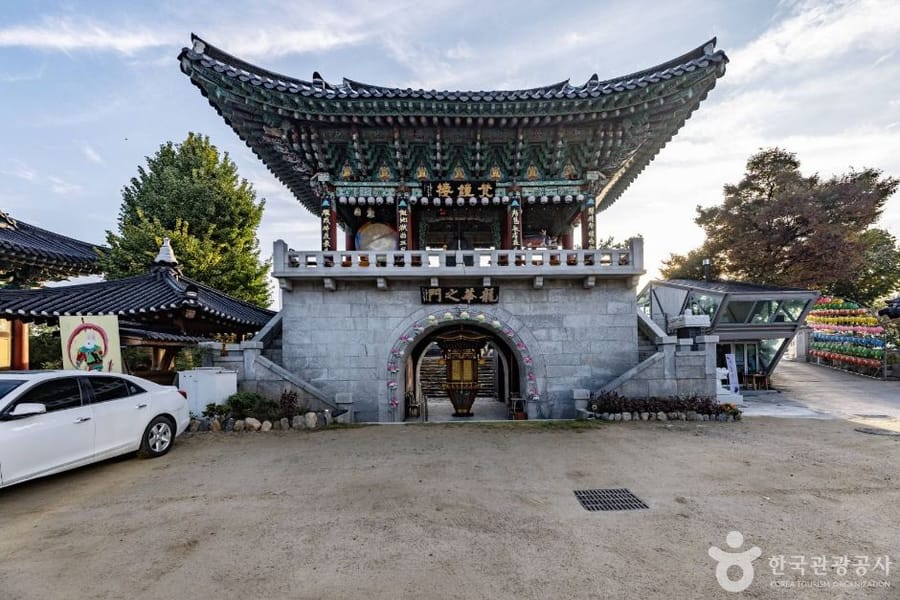
Yonghwasa is a temple from the Unified Silla period located along the Museomcheon Stream in Cheongju. It was first built by Master Eunjom during the reign of Queen Seondeok, then destroyed by fire in the 6th year of King Injo of Joseon. It was rebuilt in the 18th year of King Yeongjo (1752) by Master Byeokdam, who named it Yonghwasa, and it has continued to this day. Within the temple grounds are wooden buildings including Bogwangjeon Hall, Myeongbujeon Hall, Yonghwajeon Hall, Tamjindang Hall, Jeokmukdang Hall, and Haewollu Pavilion, as well as the Four Lions Dharma Wheel Stupa of Buddha's Sarira and the Stupa of Hyobong Seunim's Sarira. The Four Lions Dharma Wheel Stupa of Buddha's Sarira is a cylindrical stone pagoda in the ancient Ashoka style, rarely seen in Korea, and it enshrines seven genuine sarira relics. As for hermitages within the temple's mountain area, there are Dosolam Hermitage, said to have been built by Master Dosol in the 26th year of King Taejo of Goryeo (943), and Gwaneumam Hermitage, said to have been built by Master Cheongan in the 7th year of King Sukjong of Joseon (1681). At Yonghwasa, a seven-figure stone Buddha statue is enshrined, which Soonbin Eom, a consort of King Gojong, is said to have discovered in 1902 by her command. A story is also told that this temple was built by relocating Boguksa Temple, which was inside Sangdangsanseong Fortress. Unlike typical temples, it is located in the middle of the city, allowing anyone to visit comfortably. It also operates a templestay program, offering a good opportunity for visitors to stay at the temple with a comfortable mind and purify their body and mind. In spring, a cherry blossom festival is held along the Museomcheon Stream near the temple.