116 Cheongjeong-ro, Heungdeok-gu, Cheongju-si, Chungcheongbuk-do
Founded · 근대
태고종
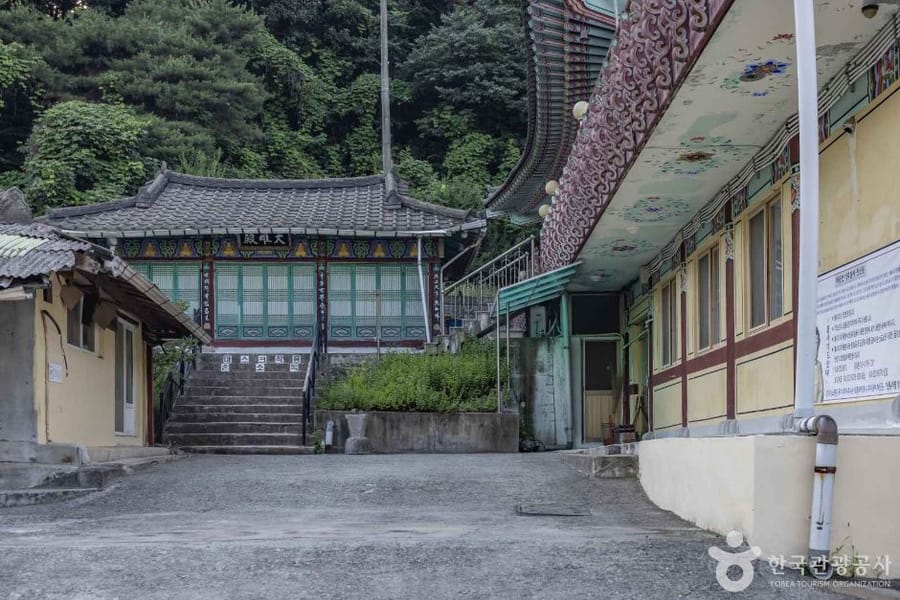
This is a temple of the Taego Order of Korean Buddhism, located on Guryongsan Mountain in Cheongju. The entrance to Cheongju begins with a sycamore-lined street that evokes a cave in summer. It is one of the most beautiful and scenic highway entrances in the country. Cheongnyongsa Temple in Cheongju is located in Suuidong, at the beginning of this tree-lined street. Suuidong was named because many people who upheld their integrity came from there since ancient times. Indeed, near Cheongnyongsa Temple, there is Chungnyeolsa Shrine, which enshrines the tomb and ancestral tablet of Song Sang-hyeon, who served as Dongnae Governor during the Imjin War and died a martyr defending Dongnae Fortress to the end. The name Cheongnyongsa (Blue Dragon Temple) is associated with Guryongsan Mountain, which embraces the temple. As the topography of Guryongsan Mountain is said to resemble nine dragons contending for a pearl, Cheongnyongsa Temple is positioned on the ridge representing the blue dragon among these nine dragons. For this reason, many temple sites from the Silla and Goryeo periods remain near Cheongnyongsa Temple, which is known as an auspicious spot, and it is said that a large temple also stood here during the Silla period. Cheongnyongsa Temple is said to have originated in 1925 when the devout laywoman Park Mun-suhaeng built a thatched house by plastering mud onto sorghum stalks and began her ascetic practices. In the Daeungjeon (Main Hall), there remain Buddhas believed to have been worshipped with incense at that time: the main Buddha, a seated Shakyamuni Buddha, and a small Avalokiteshvara Bodhisattva statue next to it. These two Buddhas are clay Buddhas (tobul). Tobul are also called clay Buddhas or sojo-bul (modeled Buddhas), referring to statues made by forming a wooden framework and attaching clay to it. The Shakyamuni Buddha statue at Cheongnyongsa Temple is rounded all over, reflecting the natural feel of clay. Although it is gilded, the rough sculpting technique allows one to feel the unrefined clay surface, which makes it even more endearing.