Around Yeongoksa Temple

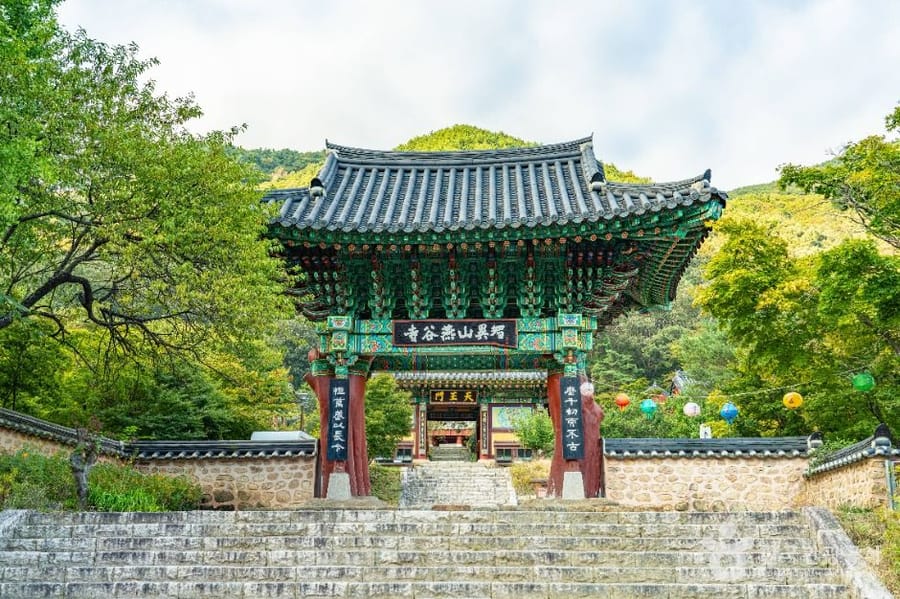
Yeongoksa Temple
Yeongoksa Temple, located in Naedong-ri, Toji-myeon, Gurye-gun, was founded in 543 (the 21st year of King Seong of Baekje) by Grand Master Yeongi, the patriarch of Hwaeomsa Temple. It was destroyed during the Imjin War and again during the Korean War. However, within its precincts, two National Treasures and four Treasures, including the Eastern Stupa and Northern Stupa, are preserved. Since March 1, 1981, when the then abbot, Monk Jang Sung-bu, demolished the old main hall with government support and donations, built a new foundation using granite and natural stones, and constructed a new main hall with five bays in front and three bays on the side, restoration efforts have been ongoing. The temple was named Yeongoksa because when Grand Master Yeongi first arrived here and was studying the geomancy of the site, there was a pond where the current main hall stands. As he intently watched the pond, the water in the center began to swirl, and a swallow flew out. Seeing this, he filled the pond, built the main hall, and named the temple Yeongoksa (燕谷寺, meaning 'Swallow Valley Temple'). Meanwhile, a notable feature at Yeongoksa is the memorial stele for righteous army leader Go Gwang-sun. When Korea's sovereignty was transferred to Japan through the Eulsa Treaty, anti-Japanese righteous armies arose across the country, with particularly active movements in the Honam region. A representative figure was Go Gwang-sun, a righteous army leader from Damyang. On August 26, 1907, he established his base at Yeongoksa in Jirisan Mountain and actively engaged in righteous army activities, but he was ambushed, defeated, and martyred. The temple also burned down at that time. A stele commemorating him has been erected within the temple grounds.