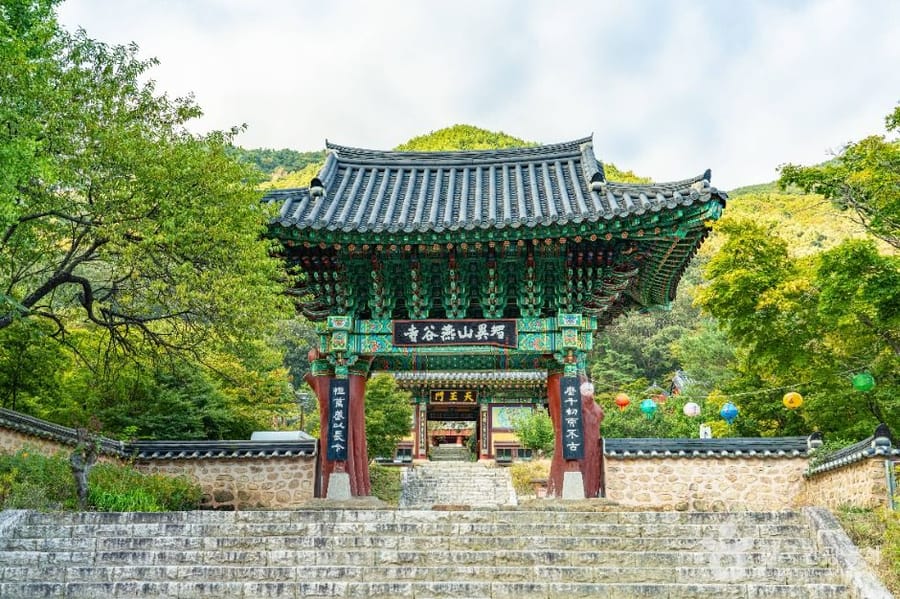
Yeongoksa Temple
淵谷寺- Era
- Founded 545 · 삼국시대
- Sect
- 조계종
- Feature
- Thousand-Year-Old Temple
774, Piagol-lo, Toji-myeon, Gurye County, Jeollanam-do
Founded 545 · 삼국시대조계종
0 visitors
Verify your visit to unlock challenges.
Temple information
Yeongoksa Temple, located in Nae-dong-ri, Toji-myeon, Gurye-gun, was founded in 543 (the 21st year of King Seong of Baekje) by Gyeongi Josa, the founder of Hwaeomsa Temple. It was destroyed during the Imjin War and again during the Korean War. However, two National Treasures and four Treasures, including the East Stupa and North Stupa, are preserved within its grounds. Since March 1, 1981, restoration work has been ongoing, after then head monk Jang Seung-bu, with government support and donations, demolished the old dharma hall and constructed a new one on the site. This new dharma hall has a foundation built with granite and natural stone, and measures five bays wide at the front and three bays deep on the sides. The temple is said to have been named Yeongoksa because when Gyeongi Josa first arrived and was observing the geomancy, there was a pond at the site of the current dharma hall. As he carefully watched the pond, the water in the center began to swirl, and he saw a swallow fly away. He then filled in the pond, built the dharma hall there, and named the temple Yeongoksa (燕谷寺, meaning "Swallow Valley Temple"). Meanwhile, what draws attention at Yeongoksa is the memorial stele for righteous army leader Go Gwang-sun. After the Eulsa Treaty transferred national sovereignty to Japan, anti-Japanese righteous armies arose in various regions, and their activities were particularly vigorous in the Honam region. A representative figure among them was Righteous Army leader Go Gwang-sun from Damyang. On August 26, 1907, he established a base at Yeongoksa Temple in Jirisan and actively engaged in righteous army activities, but he was attacked by surprise, suffered defeat, and died a martyr's death. At this time, the temple also burned down. A stele commemorating this event was erected within the temple grounds.