Around Bogwangsa (Sokcho)

Bogwangsa (Sokcho)
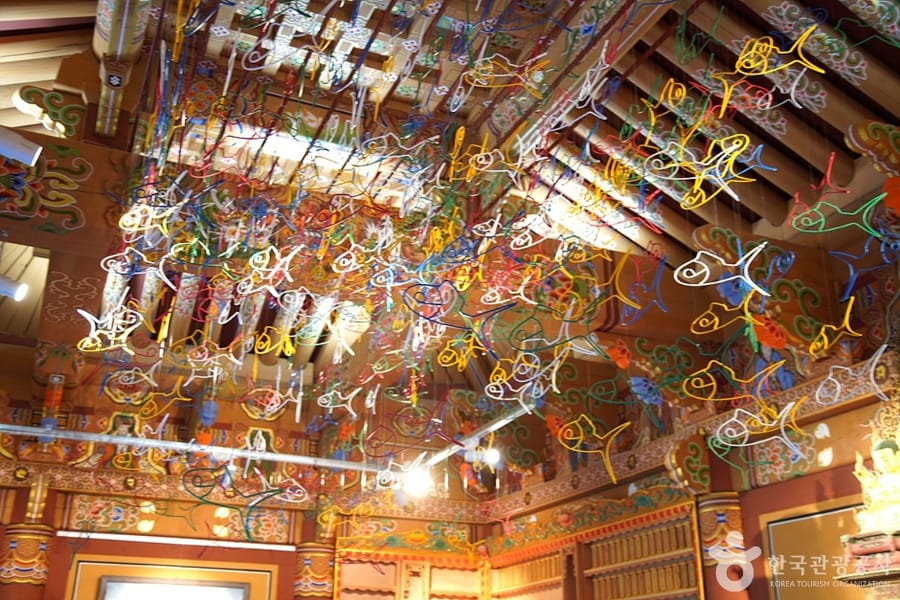
Bogwangsa Temple (Sokcho), established in 1937, was named because it enshrined Bogwangbuljon, the chief disciple among the 53 disciples of Buddha, brought from Yujeomsa Temple in Geumgangsan Mountain. Located in the most beautiful spot around Yeongrangho Lake, renowned for its excellent scenery, it constantly attracts tourists. On the mountain peak behind, a large character, 'Gwaneum,' is carved into a large rock facing east, and there is a legend that Avalokitesvara Bodhisattva (Gwaneum Bodhisattva) appeared here. Bogwangsa Temple has two unique Buddha statues: a Ksitigarbha Bodhisattva and a reclining Buddha made of jade. The reclining Buddha was initially meant to be made in Burma and brought over, but fearing it might break during transport from Burma to Korea, Burmese sculptors brought a large jade stone and came to Bogwangsa Temple to carve it directly. The Ksitigarbha Bodhisattva statue is a wooden Ksitigarbha Bodhisattva. In 2010, about 80 years after the temple's founding, experts from Chungbuk National University investigated this statue at the request of Bogwangsa Temple. During this process, a consecration prayer (조성발원문) detailing the motivation behind creating this wooden Ksitigarbha Bodhisattva was accidentally discovered in the 복장 (bokjang), the space inside the Buddha statue's belly where offerings are placed. This statue was created by Na-eop's wife, who was a eunuch (내관) during the Joseon King Injo to Hyojong period, for her deceased husband. Scholars stated that creating a Buddha statue for a deceased eunuch was an unprecedented case. At that time, even eunuchs could marry and adopt children. Han, Na-eop's wife, created the wooden Ksitigarbha Bodhisattva in August 1654 for her husband, who died after a difficult life, hoping for his rebirth in the Pure Land. It was enshrined in Anyangam Hermitage in Geumgangsan Mountain and later moved to Bogwangsa Temple by Monk Hwadam, where it was discovered 400 years after its creation.