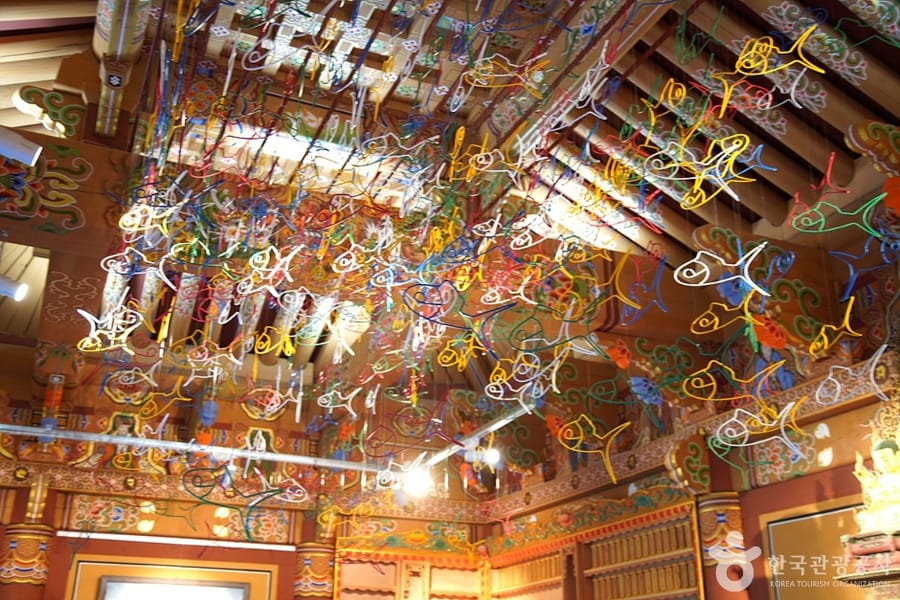
Bogwangsa (Sokcho)
普光寺- Era
- Founded 1937 · 근대
Sokcho City, Gangwon Special Self-Governing Province
Founded 1937 · 근대
0 visitors
Verify your visit to unlock challenges.
Temple information
Bogwangsa (Sokcho) is a temple founded in 1937, and its name is derived from the fact that Bogwangbuljon, the chief disciple among the 53 Buddhas (disciples of Buddha), was enshrined here after being brought from Yujeomsa Temple in Geumgangsan. It is located in the most beautiful spot around Yeongnangho Lake, which is famous for its outstanding scenery, attracting a continuous stream of tourists. On the peak behind the temple, the large characters "Gwaneum" are carved into a large rock facing east, and there is a legend that Gwaneum Bosal (Bodhisattva of Compassion) once appeared here. Bogwangsa has two unique Buddhist statues: Jijang Bosal (Ksitigarbha Bodhisattva) and a reclining Buddha made of jade. Initially, the reclining Buddha was meant to be crafted in Burma and brought over, but out of concern that it might break during transport from Burma to Korea, Burmese sculptor monks reportedly brought a large piece of jade and personally created it at Bogwangsa. The Jijang Bosal statue is a wooden one. In 2010, about 80 years after Bogwangsa was founded, experts from Chungbuk National University, commissioned by Bogwangsa, were examining this statue when a "josungbalwonmun" (a dedicatory inscription) detailing the creation motive of this wooden Jijang Bosal was accidentally discovered in its "bokjang" (the cavity in the statue's belly where offerings are placed). This statue was created by the wife of Na Eop, an eunuch during the Joseon Dynasty's Injo to Hyojong reigns, for her deceased husband. Scholars have stated that the creation of a Buddha statue for a deceased eunuch is an unprecedented case. At that time, even eunuchs could marry and adopt children. Han, the wife of Na Eop, created the wooden Jijang Bosal in August 1654 for the peaceful repose of her husband, who died after suffering, and enshrined it in Anyangam Temple in Geumgangsan. It was later moved to Bogwangsa by Monk Hwadam and discovered approximately 400 years after its creation. Nearby tourist attractions around Bogwangsa include resorts along Yeongnangho Lake and the Yeongnangho Golf Club. Mini-golf, enjoyed in front of Bogwangsa, is a recreational form of golf that anyone, regardless of age or gender, can easily enjoy, offering a different experience from typical golf played on large courses. Located beneath a pine forest, visitors can also enjoy a "pine forest bath" (forest bathing).