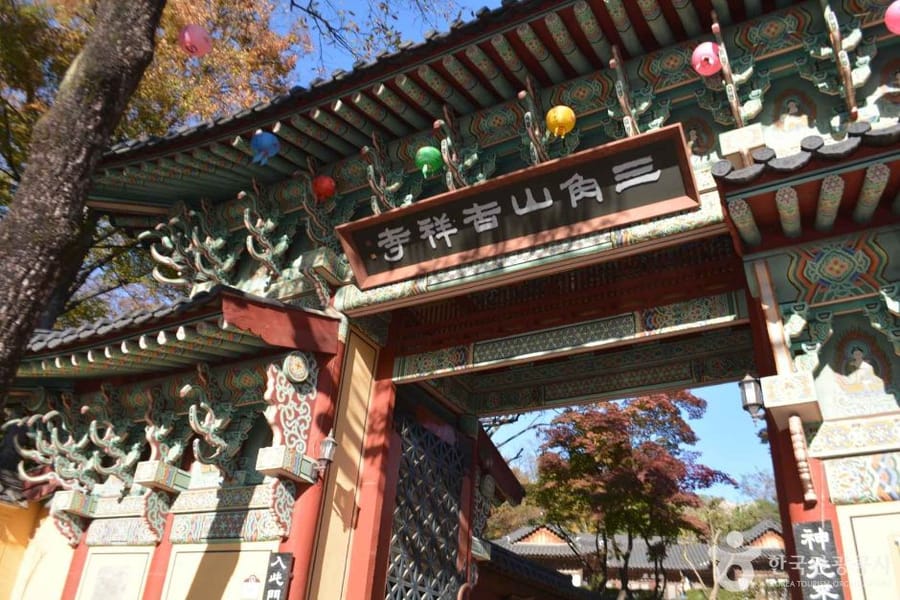
Gilsangsa Temple
吉祥寺- Era
- Founded 1987 · 현대
- Sect
- 조계종
68, Seonjam-ro 5-gil, Seongbuk-dong, Seongbuk District, Seoul Special City
Founded 1987 · 현대조계종
0 visitors
Verify your visit to unlock challenges.
Temple information
Gilsangsa is a temple of the Jogye Order of Korean Buddhism, located at the foot of Bukhansan Mountain in Seongbuk-dong, Seongbuk-gu, Seoul. The history of Gilsangsa began in 1987 when Ms. Kim Young-han, moved by Ven. Beopjeong's philosophy of non-possession and asceticism, donated approximately 7,000 pyeong of land and over 40 buildings. Ven. Beopjeong registered it as Daebeopsa Temple in 1995 and formally established it as Gilsangsa after renaming it on December 14, 1997. Gilsangsa boasts various buildings and facilities including Geukrakjeon (Hall of Ultimate Bliss), Seolbeopjeon (Dharma Lecture Hall), Jijangjeon (Ksitigarbha Hall), Beomjonggak (Bell Pavilion), a statue of Avalokiteshvara, Gilsang Pagoda, Gilsanghwa Gongdeokbi (Gilsanghwa Monument), and Ven. Beopjeong's Jinyeonggak (Portrait Hall). In Geukrakjeon, Amitabha Buddha is enshrined as the main Buddha, flanked by Avalokiteshvara Bodhisattva and Ksitigarbha Bodhisattva as attendant figures. In 2005, old buildings were renovated to include Jijangjeon and Seonyeoldang (the dining hall), and in 2008, Seolbeopjeon and the bell tower were newly built, creating a practice space harmoniously integrated with nature. Within the temple, a delicate and profound statue of Avalokiteshvara, created through the unique blend of Buddhist and Catholic faith by sculptor Choi Jong-tae, gently welcomes many visitors. In 2013, Jinyeonggak, a hall exhibiting Ven. Beopjeong's relics and writings, was opened. At Seolbeopjeon, it operates educational programs such as a Buddhist university, introduction to Buddhism, yoga, sutra copying, and Seon meditation, thereby fulfilling its role as an educational center for Buddhist practice.