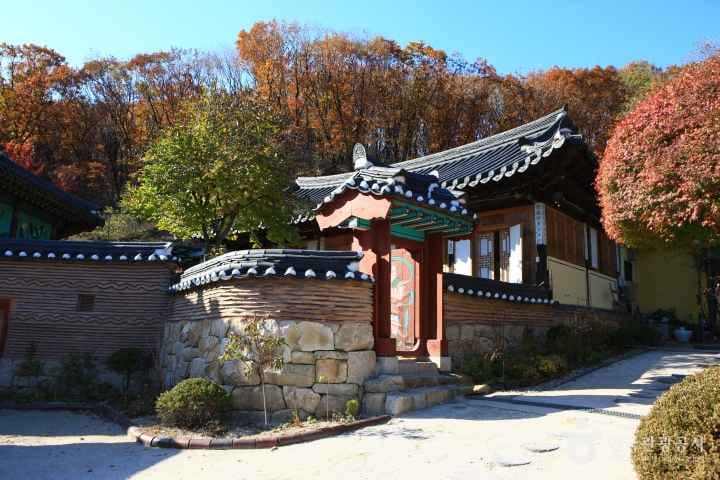
Hwagyesa Temple
- Era
- Founded 1522 · 조선
- Sect
- 조계종
117 Hwagyesagil, Gangbuk-gu, Seoul (Suyu-dong)
Founded 1522 · 조선조계종
0 visitors
Verify your visit to unlock challenges.
Temple information
Hwagyesa was originally an hermitage called Bodeogam in a place called Buheodong. Later, in the 17th year of King Jungjong's reign (1522), Bodeogam was moved south to Hwagyedong, where a Dharma hall and monks' quarters were built, and it was renamed Hwagyesa. In 1618, the 10th year of King Gwanghae-gun's reign, it was completely destroyed by fire but was rebuilt the following year by Monk Dowol. It is located at the southern tip of the Kalbawi Ridge on Samgaksan Mountain, the core of Bukhansan Mountain. Although it is close to the city center and adjacent to residential areas, it is embraced by forests and valleys, allowing visitors to feel the comfort provided by nature and the serene atmosphere of a mountain temple, making it a representative temple of Gangbuk-gu. In particular, Hwagyesa is the birthplace of the Gwan-eum International Zen Center, started by Zen Master Seung Sahn, and it is also a central temple for Zen practice and international missionary work, where foreign monks and lay Buddhists practice. At Hwagyesa, daily afternoon rituals and prayers are held, and family Dharma services are conducted every Sunday. Hwagyesa is also a center for education. Hwagyesa Buddhist University, which began its accreditation in 2002, educates approximately 700 Buddhists every year. A basic doctrine course and a liberal arts course, which includes learning Cheonsugyeong (Sutra of One Thousand Hands and Eyes), Yebul (daily ritual), Prajnaparamita Hridaya Sutra (Heart Sutra), and various rituals, each run for three months. The two-year Buddhist university program is offered in weekday and weekend classes, and there are also one-year graduate school and sutra study programs. In addition, various faith-based organizations such as the Lay Buddhist Association, Youth Association, Nahana University Student Dharma Group, Student Association, and Children's Association are active, along with the Geosa Association (laymen's group), choir, and various volunteer groups within the Lay Buddhist Association.