Around Baegyangsa Temple

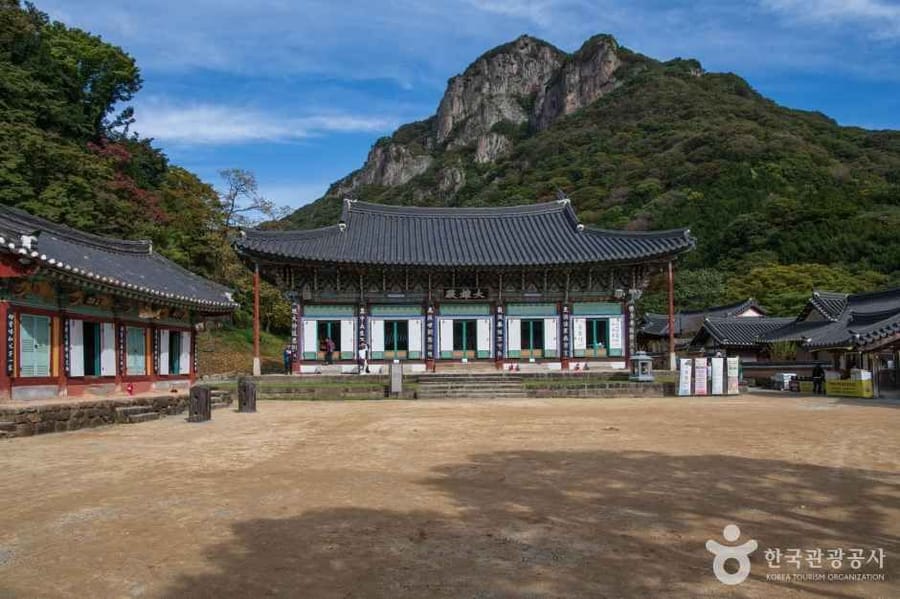
Baegyangsa Temple
Baekyangsa Temple is located within Naejangsan National Park and is said to have been founded during the reign of King Mu of Baekje (632 AD). With huge rocks as a backdrop, clear and cool valley water flows on both sides, creating a very beautiful landscape. It showcases varied and beautiful scenery throughout the year, including stunning autumn foliage. Daeungjeon Hall, Geuknakbojeon Hall, and Sacheonwangmun Gate are designated as Jeollanam-do Tangible Cultural Heritage, while the Stupa of Master Soyo is designated as a Treasure. Passing through a forest path lined with sawtooth oaks and maple trees, Ssanggyeru Pavilion is the first thing that catches the eye upon entering Baekyangsa Temple. In front of it is a pond created by damming the valley, and behind it, strange rock formations stand like a folding screen, making the reflection of Ssanggyeru Pavilion in the pond water resemble a beautiful painting. Beyond Ssanggyeru Pavilion are Daeungjeon Hall, Geuknakbojeon Hall, and a stupa. Baekyangsa was originally called Baegamsa at the time of its founding, and later changed to Jeongtosa during the Goryeo Dynasty. It is said that during the Joseon Dynasty, King Seonjo's teacher, Hwangyangjo, saw a white lamb listening to his sermons every time he read Buddhist scriptures, leading to the temple being named Baekyangsa (White Lamb Temple). It was famous as a place for meditation (Seon dojang) and produced many eminent monks who led the Buddhist community. Recently, five eminent monks, including Hwan-eung (the 2nd patriarch during the Japanese colonial period), Manam (the 1st patriarch of the Jogye Order), Mukdam (the 1st patriarch of the Taego Order), and Patriarch Seoungdang, have emerged from this temple. Furthermore, many hermitages can be found along the hiking trails, such as Yaksam Hermitage, Unmunam Hermitage, and Cheonjinam Hermitage, all boasting excellent scenery. Yaksam Hermitage, a 20-minute walk from the temple entrance, serves as an observatory, offering a panoramic view of Baekyangsa Temple nestled amidst rolling mountains. Opposite this beautiful scenery, a colony of 5,000 evergreen Torreya trees (nutmeg trees) forms a cluster, designated as a Natural Monument. The dense centuries-old sawtooth oaks along the 0.5 km path from the parking lot to the temple, along with over 3,000 maple trees and the Torreya forest, are excellent for forest bathing.