Jikjisa
直指寺- Era
- Founded 418 · 삼국시대
- Sect
- 조계종
- Feature
- 33 Avalokiteśvara Sacred Sites, District Head Temple, Thousand-Year-Old Temple
95 Jikjisa-gil, Daehang-myeon, Gimcheon-si, Gyeongsangbuk-do
Founded 418 · 삼국시대조계종
0 visitors
Verify your visit to unlock challenges.
Temple information
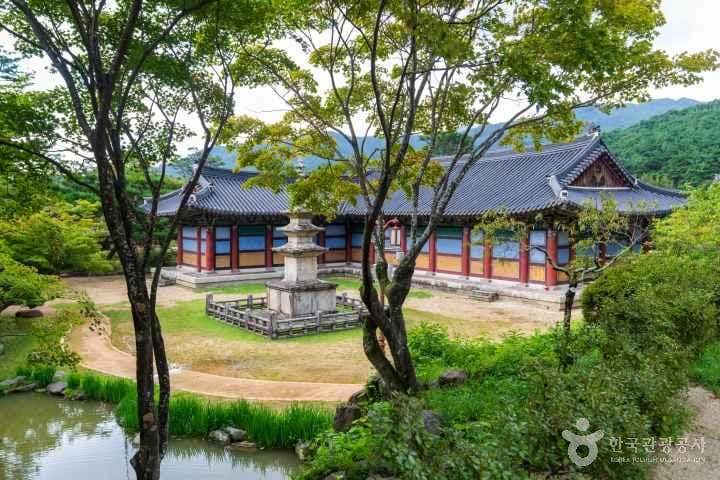
Jikjisa Temple, located at the foot of Mt. Hwangaksan, is the head temple of the 8th district of the Jogye Order of Korean Buddhism. It was founded in the 2nd year of King Nulji of Silla (418 AD) by the Venerable Ado, along with Dorisa Temple. Afterwards, it was renovated by Jajang in the 14th year of Queen Seondeok (645), and by Cheonmuk in the 4th year of King Gyeongsun (930). It was rebuilt by Neungyeo in the 19th year of King Taejo of Goryeo (936) with royal assistance. Although it was completely destroyed during the Imjin War, it was restored over a period of about 60 years starting from the 2nd year of Gwanghaegun (1610). There are two theories regarding the name Jikjisa: one suggests it refers to Mt. Hwangaksan, meaning "there is also a good temple site there," leading to the name Jikji; the other states that in the early Goryeo period, when the monk Neungyeo measured the temple site, he did so directly with his own hands without using a ruler. During the Joseon Dynasty, Hakjo served as abbot, and Great Master Yujeong began his monastic life at this temple. Existing buildings include the Daeungjeon (Main Buddha Hall), Birojeon Hall where 1,000 baby Buddha statues are enshrined side by side, Geuknakjeon Hall, Eungjinjeon Hall, Gwaneumjeon Hall, Namwollyo, Myeongbujeon Hall, Yaksajeon Hall, Seolbeopjeon Hall, Mandeokjeon Hall, Josajeon Hall, Jehadang, Myeongwollyo, Cheongpungnyo, Samyeonggak, and Beomjonggak. There are also Iljumun Gate (One Pillar Gate) with pillars made from a 1,000-year-old kudzu root and bush clover, Geumgangmun Gate (Diamond Gate), and Sacheonwangmun Gate (Four Heavenly Kings Gate). In 2002, the temple officially hosted the nation's first Temple Stay program by inviting foreign ambassadors to Korea, which is now operated in two types: meditation experience and relaxation.